
Picture this: it’s the last week of the month, and someone in the HR department is juggling three spreadsheets, a stack of leave applications, and a payroll deadline that won’t wait. One employee’s attendance wasn’t logged properly, someone is waiting for their leave approval for two days, and another’s appraisal got pushed back because nobody remembered to schedule it. This is the story of every workplace today. This usually happens when management operates on memory, half-baked sticky notes, and good intentions instead of a proper system. It somehow works, until it doesn’t. That’s exactly the gap an Employee Management System is built to close. It is not a fancy add-on; rather, it’s the backbone that keeps everything about your workforce visible, consistent, connected, and easy to act on. Let’s see what that actually means.
What Is an Employee Management System?
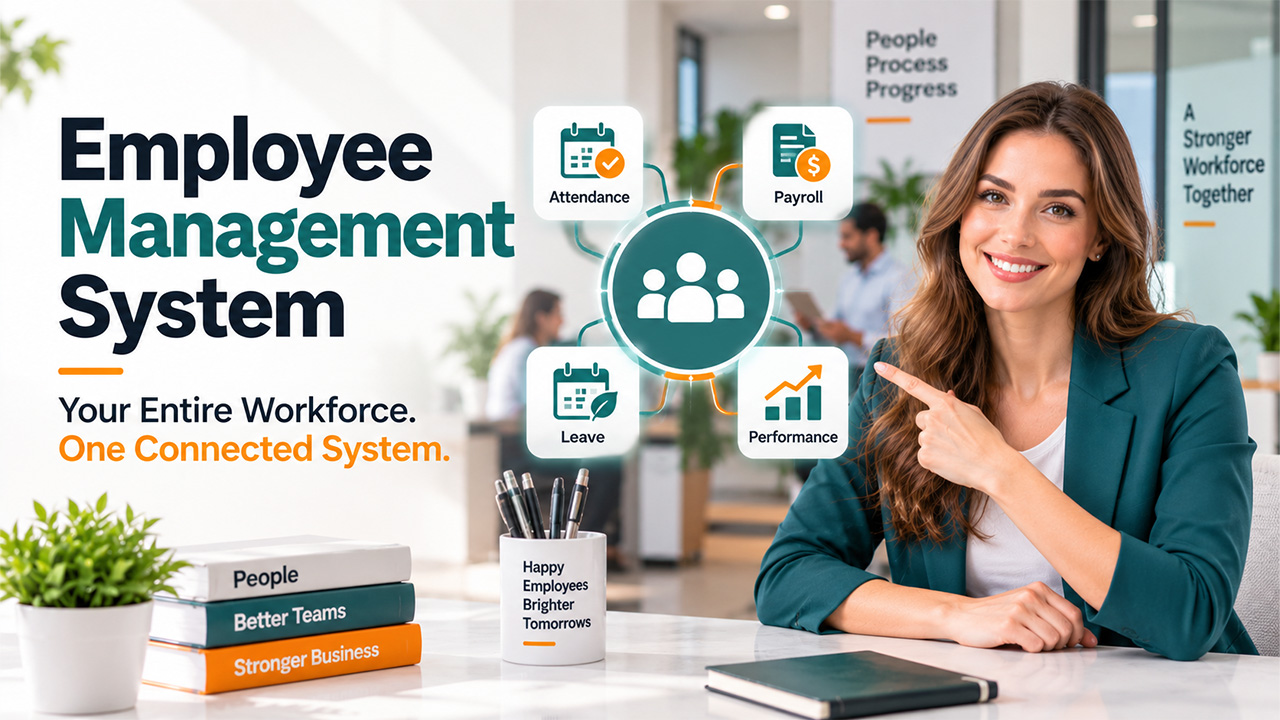
An Employee Management System, or EMS, is a digital setup that businesses use to handle everything related to their workforce. From the day someone joins an office to the day they leave; employee management system software manages it all effectively. Instead of scattered spreadsheets and files, everything sits in one place: attendance, leave, payroll, performance, and employee records.
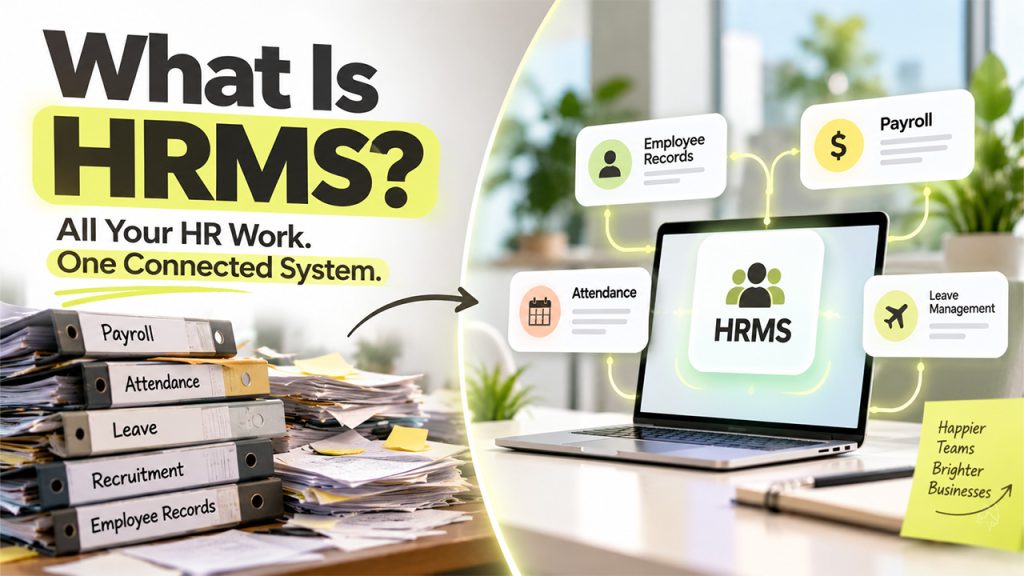
At its core, an EMS builds and maintains an employee database, a single reliable source of truth about everyone on the payroll. People often mix up “EMS” and “HRMS.” There’s overlap, but HRMS usually leans toward core HR like compliance, payroll, and benefits administration while EMS covers the broader day-to-day of managing people like tracking tasks, attendance, and performance. Either way, both aim to automate the task of managing people and take manual labor out of it.
Types of Employee Management Systems
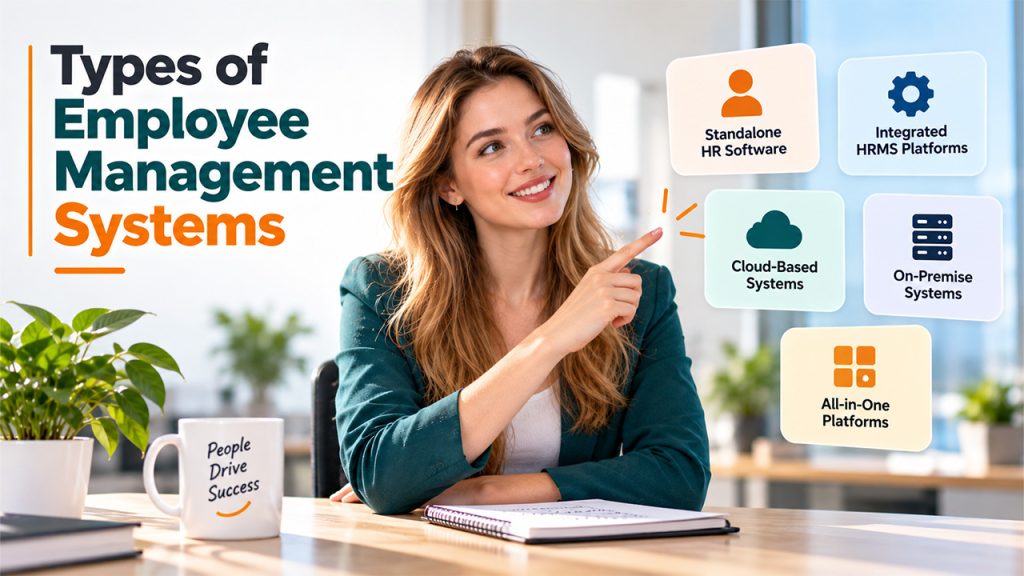
Every business is unique and does not need the same kind of system. Depending on the sizes of a company and what it actually needs help with, an Employee Management System can look pretty different from one business to the next.
Standalone HR Software:
This type of software mainly focuses on Core HR tasks like leave, attendance, and employee records. It is simple and easy to use. It works well for most small businesses that have simple workflows and business needs without managing anything too complex.
Integrated HRMS Platforms:
These bring HR, payroll, and compliance into one system. They’re especially designed for businesses that want everything connected instead of juggling separate tools for separate departments.
Cloud-Based Employee Management Software:
It is hosted online, and you can access it from anywhere if you have a stable internet connection. This type is popular with remote and hybrid teams as there are no servers to maintain and no IT headaches; just log in and start working.
On-Premise Systems:
You can install and run this on a company’s own server. These provide businesses with more control over their data, which matters a lot in industries with strict compliance rules. However, one downside is that it usually costs more to maintain.
All-in-One Employee Management Platforms:
These try to do it all, hiring, onboarding, performance, payroll, and even employee engagement, under a single roof. These are great for growing companies that don’t want to stitch together five different tools.
Here’s a quick side-by-side to make the differences easier to digest:
| Type | Best For | Main Focus |
| Standalone HR Software | Small teams | Basic HR tasks |
| Integrated HRMS | Mid-to-large companies | HR + payroll + compliance |
| Cloud-Based Software | Remote/hybrid teams | Accessibility |
| On-Premise Systems | Regulated industries | Data control |
| All-in-One Platforms | Growing businesses | Full employee lifecycle |
Key Features of an Employee Management System
A good employee management software is more than just storing data. It’s about making that data useful for business. Here’s what most reliable EMS platforms bring to the table:
Centralized Employee Database Management:
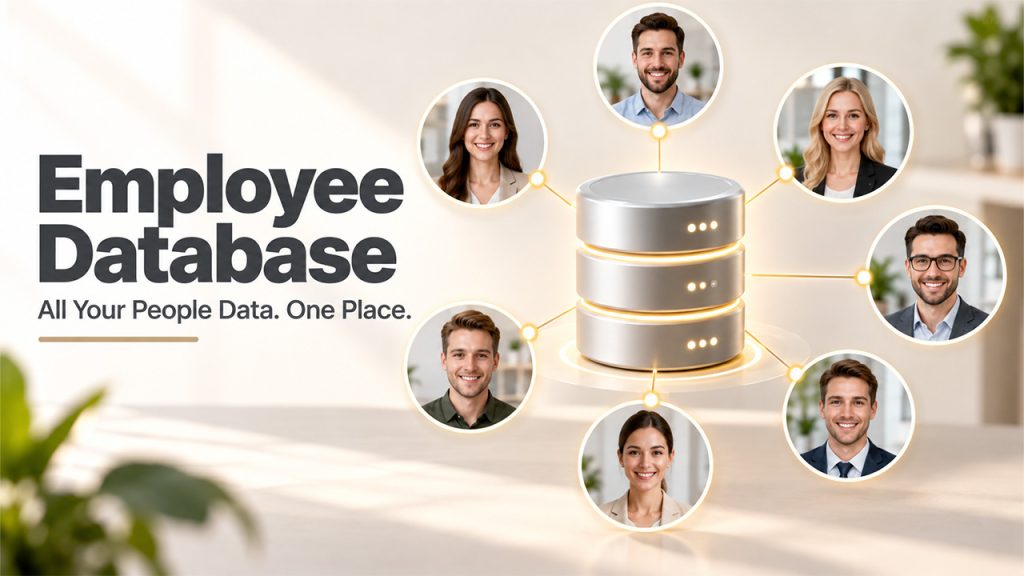
It keeps every employee’s detail like contact, role, salary history, and documents organized in one centralized database. You can find whatever you need in seconds without having to dig through multiple spreadsheets.
Automated Attendance and Time Tracking:
It automatically logs employee logins, logouts, and leave requests. This way, nobody has to chase down a manager for approval over time.
Seamless Payroll Integration:
Many platforms allow you to connect attendance and leave data directly to payroll software. This reduces the need to manually calculate everything which can cause costly errors.
Performance Management Tools:
The systems come with built-in tools to set goals for employees, track their work progress, and run appraisals without relying on scattered notes or forgotten follow-ups.
Employee Self-Service Portals:
Several employee management software solutions provide self-service portals for employees. They can check their own leave balance, download pay slips, or update their personal details without having to trouble HR every time.
Workforce Reporting and Analytics:
Dashboards that show trends like turnover rates, absenteeism, or department-wise productivity, helping managers spot issues before they grow.
These features don’t just make life easier for HR teams. They also give employees a sense that things are being handled fairly and consistently, which quietly builds trust over time.
Benefits of an Employee Management System
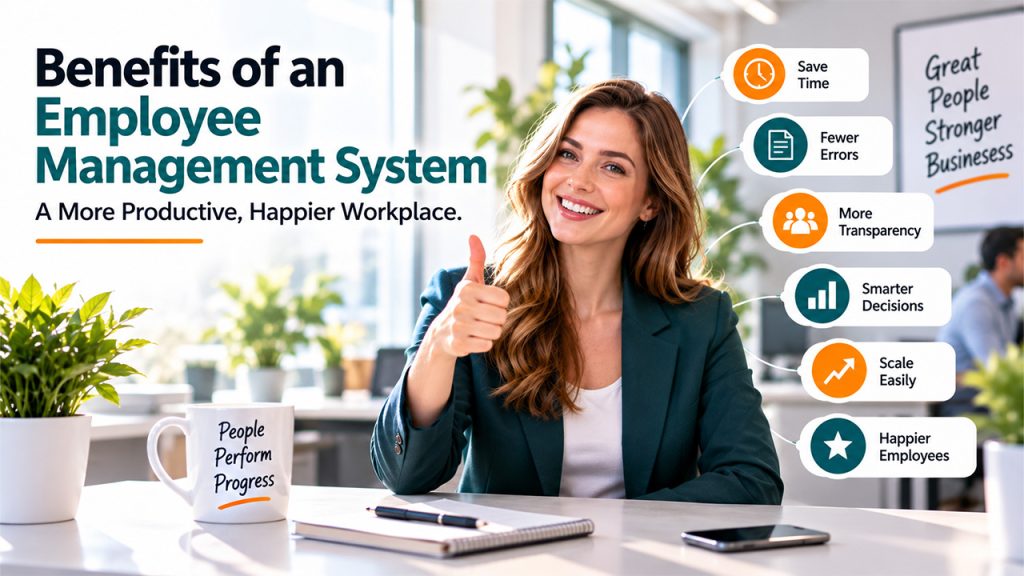
So, the honest question is what a business actually gains when they switch from spreadsheets to real employee management software. Let’s see the benefits that come with an employee management system software:
Save Time on Repetitive HR Tasks:
Manual processes like tracking attendance or approving leave requests can eat up hours every week, and it becomes difficult to manage everything during busy hours. Automating them frees up that time which HR professionals can use for actual strategic work that needs human intervention.
Reduce Payroll and Record-Keeping Errors:
It is common to make payroll mistakes, miss the appraisal timeline, and lose important records when everything runs through one system instead of five different files. For instance, a company once had to reissue paychecks every month because it miscalculated an employee’s overtime hours. This problem disappeared once attendance and payroll were linked.
Improve Workplace Transparency:
When employees can see their own data, leave balances, performance scores, and attendance history; they tend to trust the company more because this will minimize confusion and disputes.
Make Better Workforce Decisions:
With real data on hand, managers can spot patterns, like a department with high turnover, and act on them early instead of reacting late. This significantly improves decision-making and benefits the company.
Scale HR Operations as Your Business Grows:
As a company hires more people, an EMS handles the added complexity without needing a proportional increase in HR staff. If a business grows from 50 to 500 employees, it doesn’t necessarily mean it should also increase its HR headcount to manage employees better. The employee management system can do heavy lifting on records, attendance, and payroll.
Create a Better Employee Experience:
Simple things, like getting pay slips instantly or applying for leave without a paper form, add up to a workplace that feels more organized and respectful of people’s time.
Employee Management System Use Cases: A Real-World Example
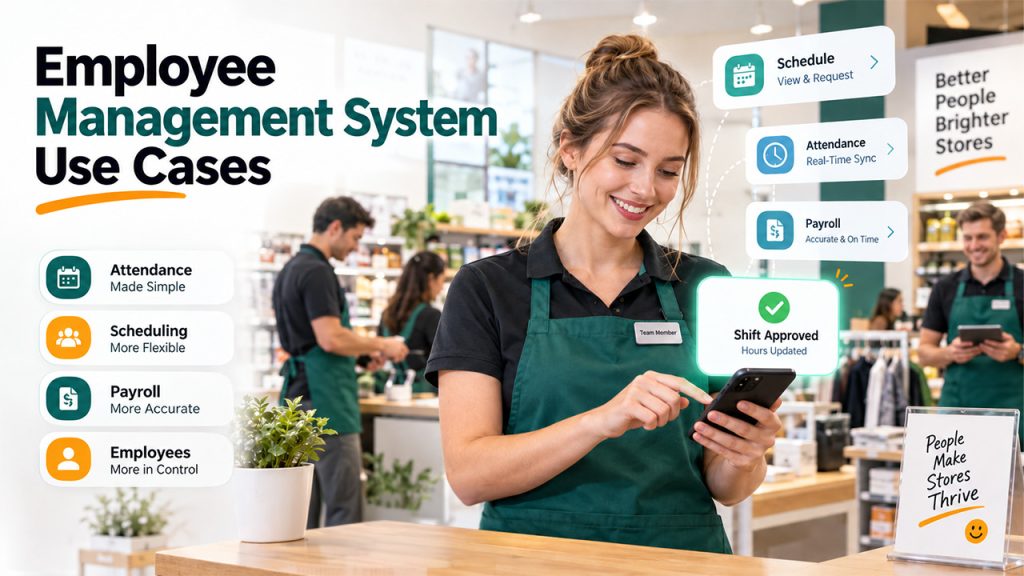
Let’s understand all of this with something concrete. Imagine a mid-sized retail company with 200 employees spread across five different store locations.
The Problem: Manual Attendance and Payroll Tracking
HR was manually tracking attendance across five separate spreadsheets, and payroll errors were happening almost every month because shift changes weren’t being recorded properly.
The Solution: Connecting Workforce Data in One Platform
The company adopted a cloud-based Employee Management Platform that made things easy by connecting attendance, scheduling, and payroll in one place.
Automating Attendance Across Multiple Locations
Now, store managers could approve shift changes on their phones, and the system automatically updated each employee’s hours in real time. There is absolutely no need to track attendance manually.
Improving Payroll Accuracy With Connected Data
Calculation errors dropped significantly since the attendance data fed directly into payroll. These results were seen within the first two months of adopting employee management software. Now, no employee is dissatisfied with their pay slips.
Giving Employees More Control Through Self-Service
Staff can check their schedules and request time off from a mobile app, cutting down the constant back-and-forth with HR.
The Result: Less Administrative Work for HR
HR spent far less time on administrative fixes and could focus on things like training programs and employee retention strategies instead.
This is a pretty typical story. It’s not glamorous, but it’s exactly the kind of everyday improvement that makes an EMS worth the investment.
Conclusion
An Employee Management System isn’t a one-time purchase that you set up and forget about. It’s an ongoing part of how a business runs, evolving as the company grows, as teams change, and as new challenges show up. The right EMS platform can turn scattered information into something clear and usable. Whether it’s a small business trying to do away with messy spreadsheets or an enterprise juggling payroll across multiple locations; employee management software can be a game changer for all. It is worth noting that it won’t solve every people problem on its own; no system can. However, it gives businesses enough visibility to make better decisions faster. In 2026, as workplaces keep shifting toward hybrid and remote setups, having that kind of clarity isn’t a luxury anymore. It’s just how good HR gets done.
Frequently Asked Questions (FAQs)
Q. What is the main purpose of an Employee Management System?
It centralizes employee data, attendance, payroll, and performance so businesses can manage their workforce efficiently instead of relying on manual processes.
Q. Is an Employee Management System the same as an HRMS?
They overlap a lot, but HRMS usually focuses more on core HR and compliance, while EMS covers broader day-to-day people management tasks.
Q. Can small businesses benefit from Employee Management Software?
Yes, even small teams save time and reduce payroll errors by switching from spreadsheets to a proper employee management system.
Q. What features should I look for in an Employee Management Platform?
Look for attendance tracking, payroll integration, self-service portals, and reporting tools that turn raw data into useful insights.
Q. Are there any downsides to using Employee Management Tools?
Yes, upfront costs, a learning curve for staff, and the need for strong data security are common challenges worth planning for early.