
Employee Offboarding
Ensure every employee departure is secure, organized, and respectful with HRCRM's Employee Offboarding solution. Automate exit workflows, safeguard business assets, maintain compliance, and deliver a smooth offboarding experience that protects your organization while preserving lasting professional relationships.

Where Every Employee Journey Ends Right
Employee offboarding is the final chapter of the employee lifecycle, and it deserves the same attention as onboarding. HRCRM helps businesses manage employee exits with structured workflows, secure asset recovery, compliance tracking, and seamless knowledge transfer, ensuring every departure is handled professionally while protecting business continuity.
The Hidden Risks of Manual Offboarding
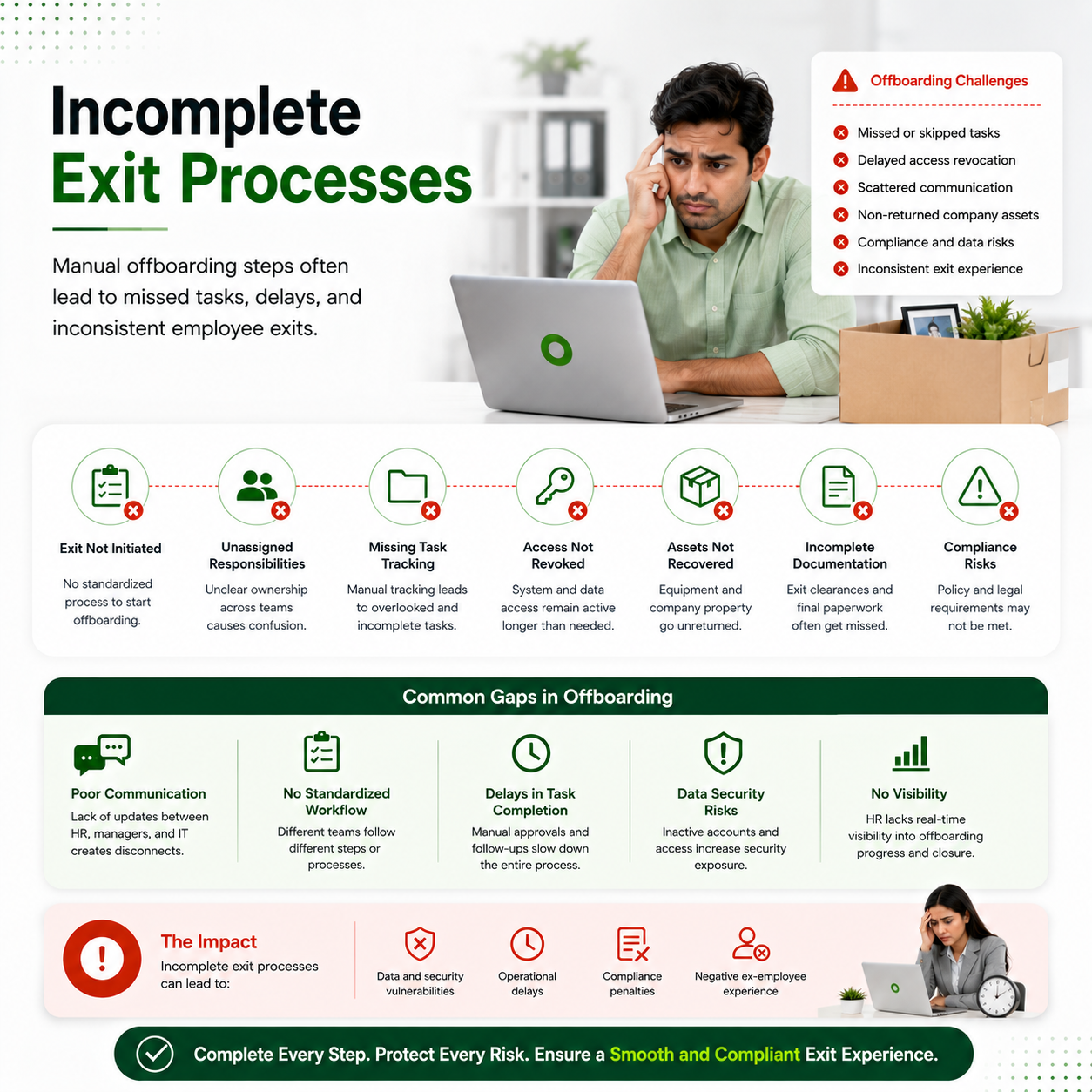
Incomplete Exit Processes
Manual offboarding steps often lead to missed tasks, delays, and inconsistent employee exits.
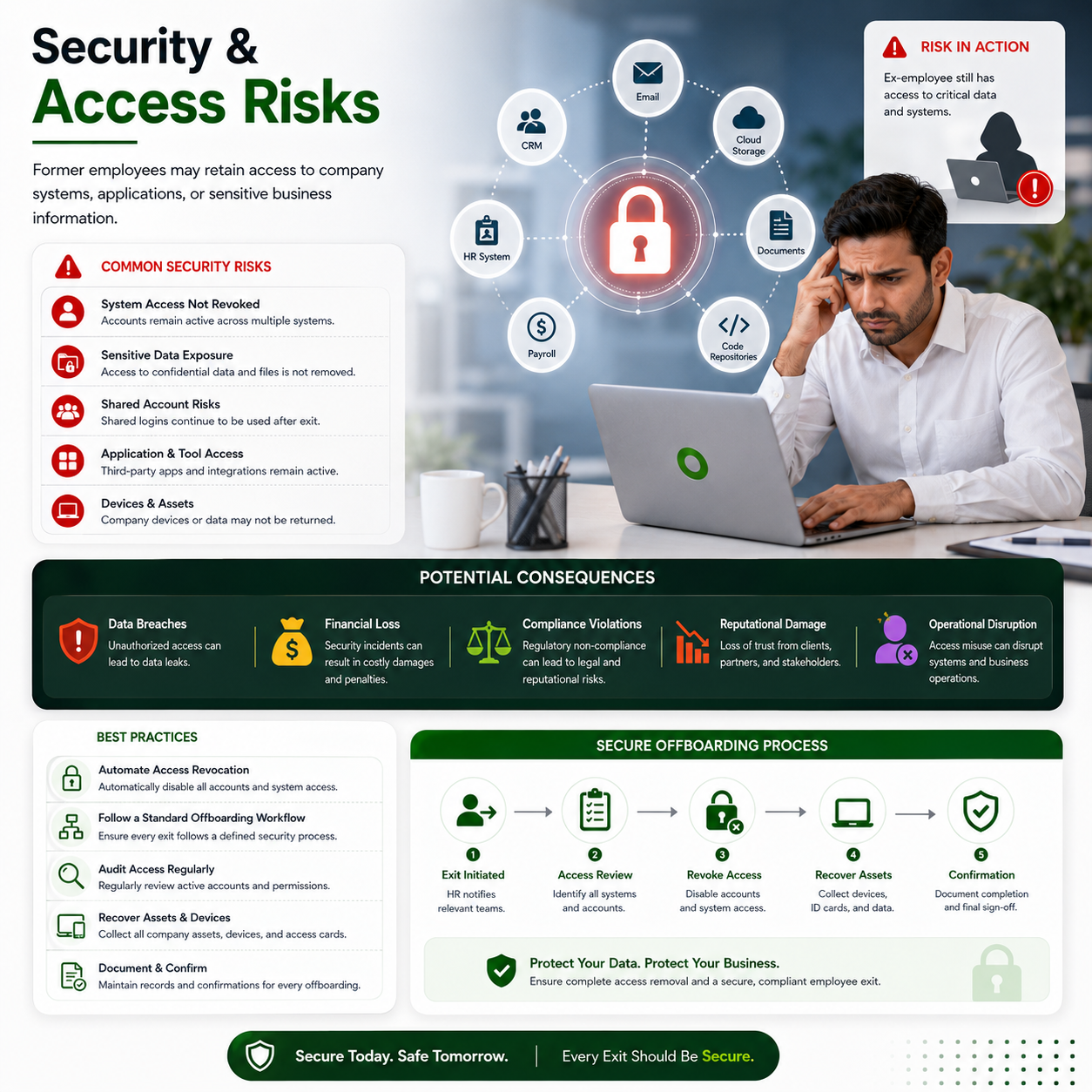
Security & Access Risks
Former employees may retain access to company systems, applications, and sensitive business information.
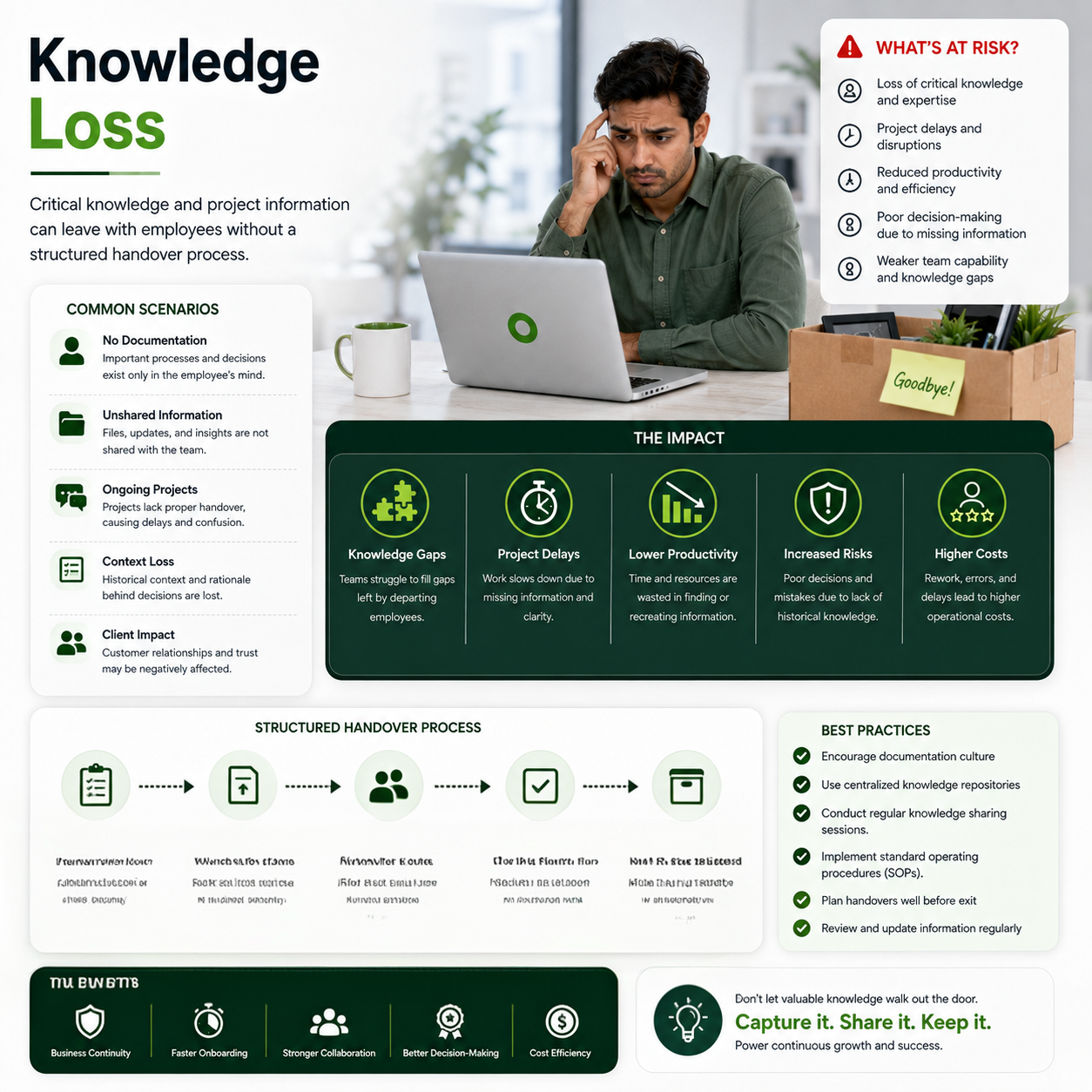
Knowledge Loss
Critical knowledge and project information can leave with employees without a structured handover process.
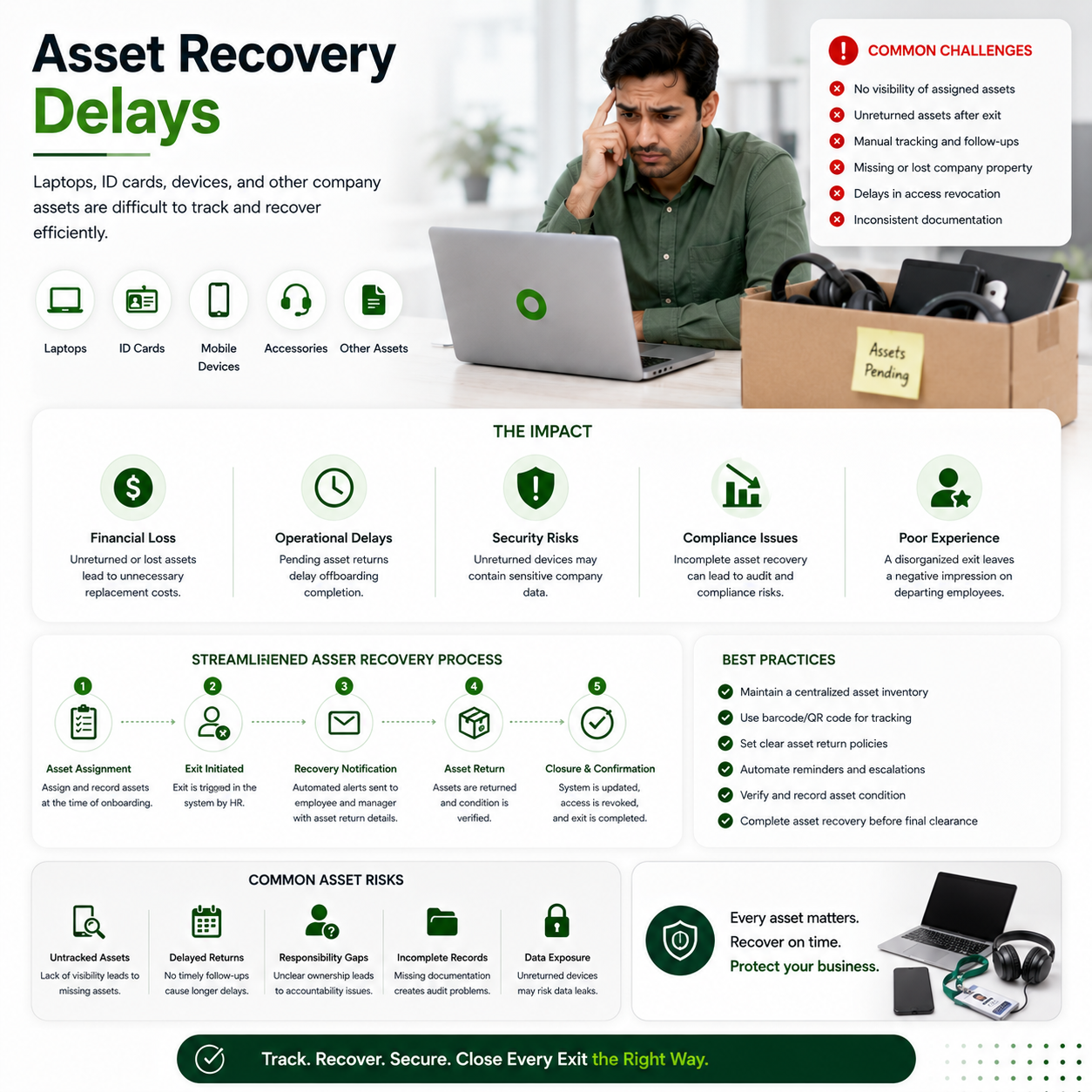
Asset Recovery Delays
Laptops, ID cards, devices, and other company assets are difficult to track and recover efficiently.
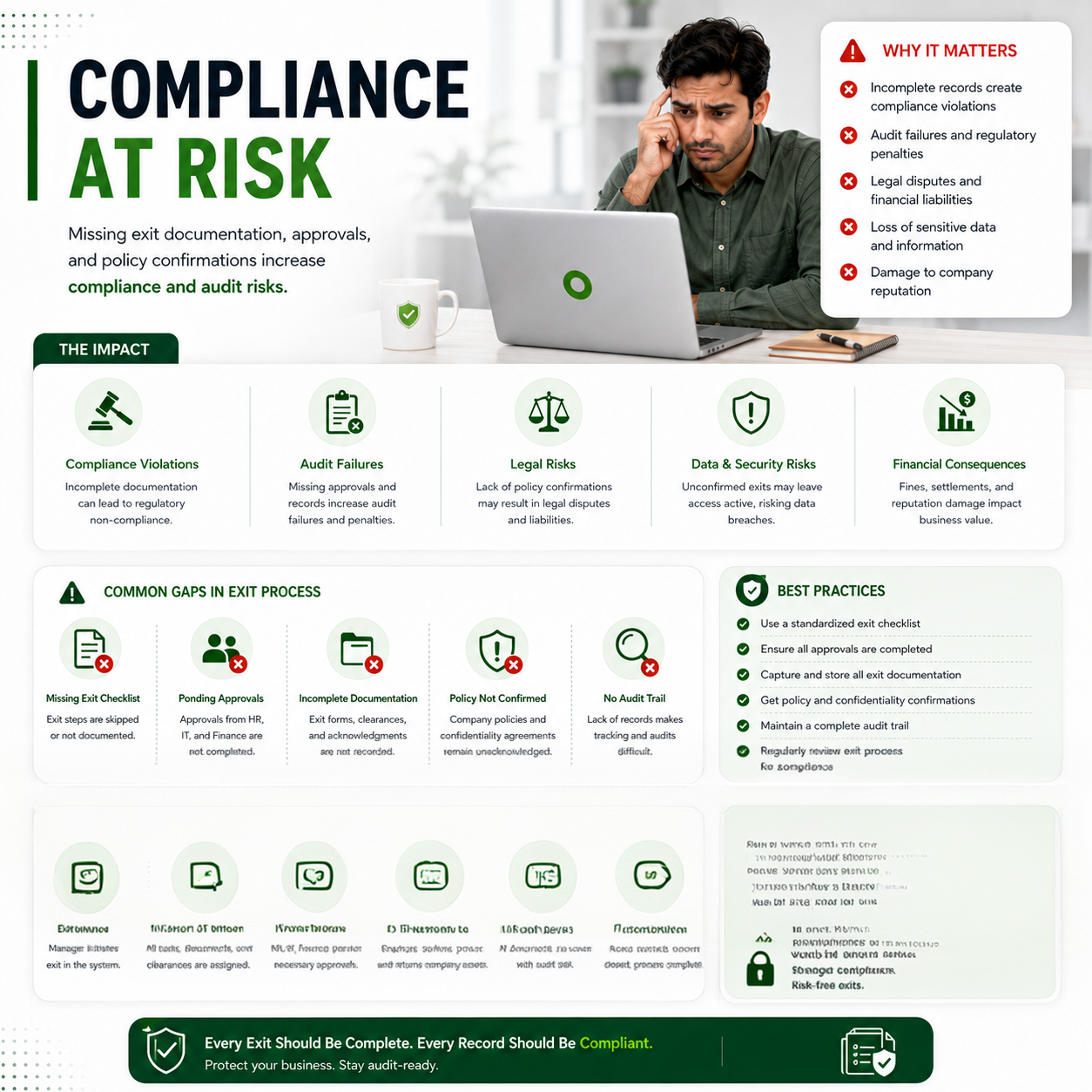
Compliance Gaps
Missing exit documentation, approvals, and policy confirmations increase compliance and audit risks.
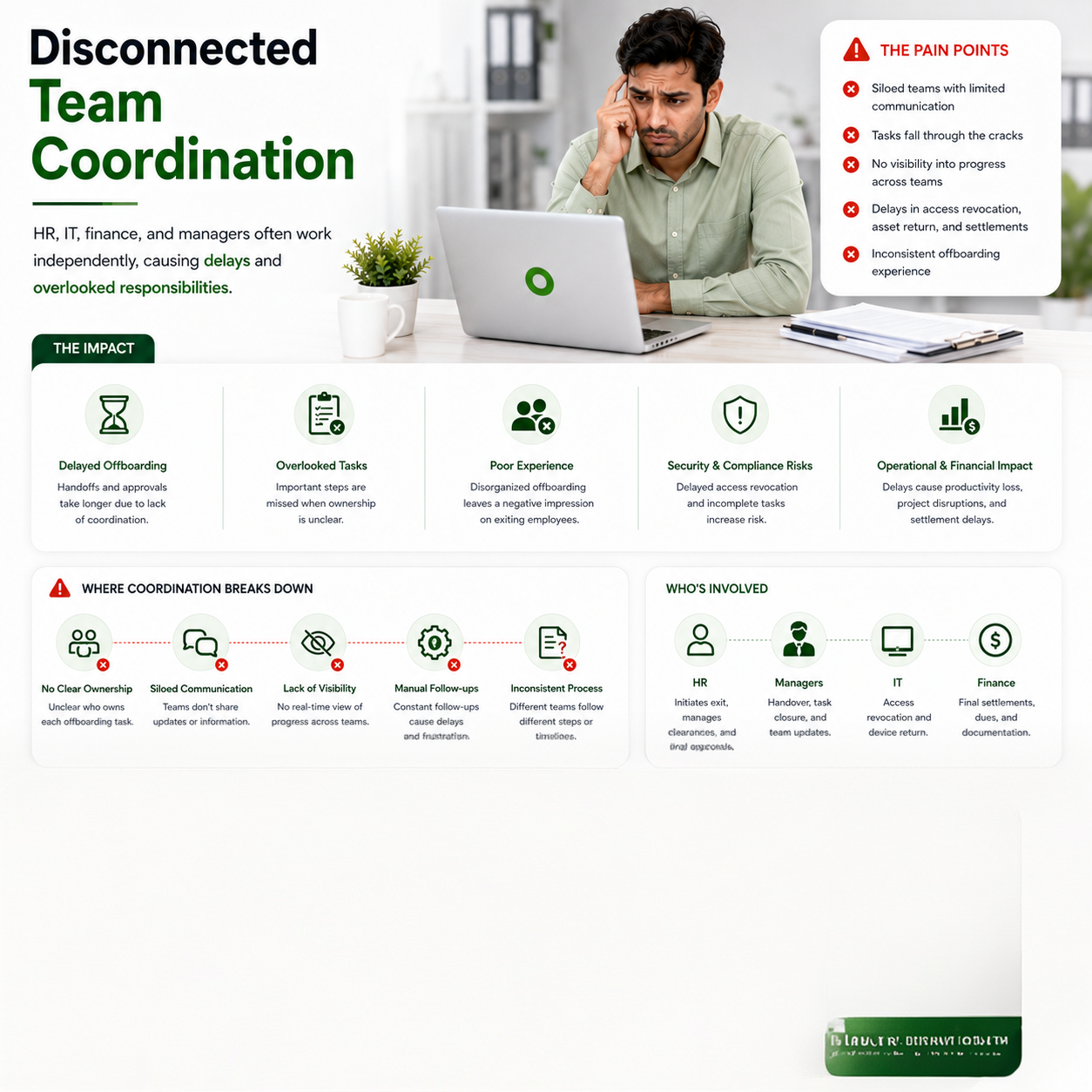
Disconnected Team Coordination
HR, IT, finance, and managers often work independently, causing delays and overlooked responsibilities.
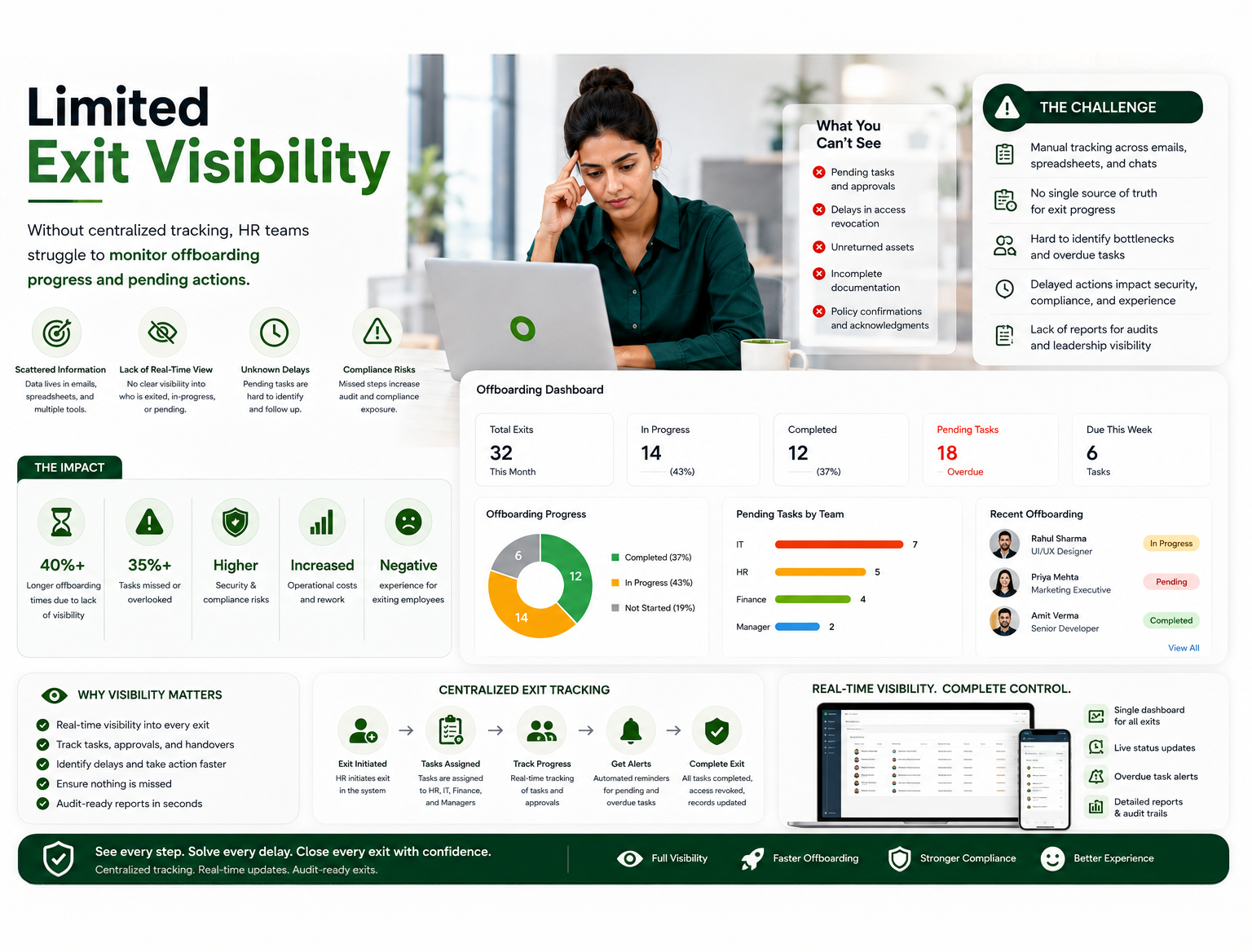
Limited Exit Visibility
Without centralized tracking, HR teams struggle to monitor offboarding progress and pending actions.
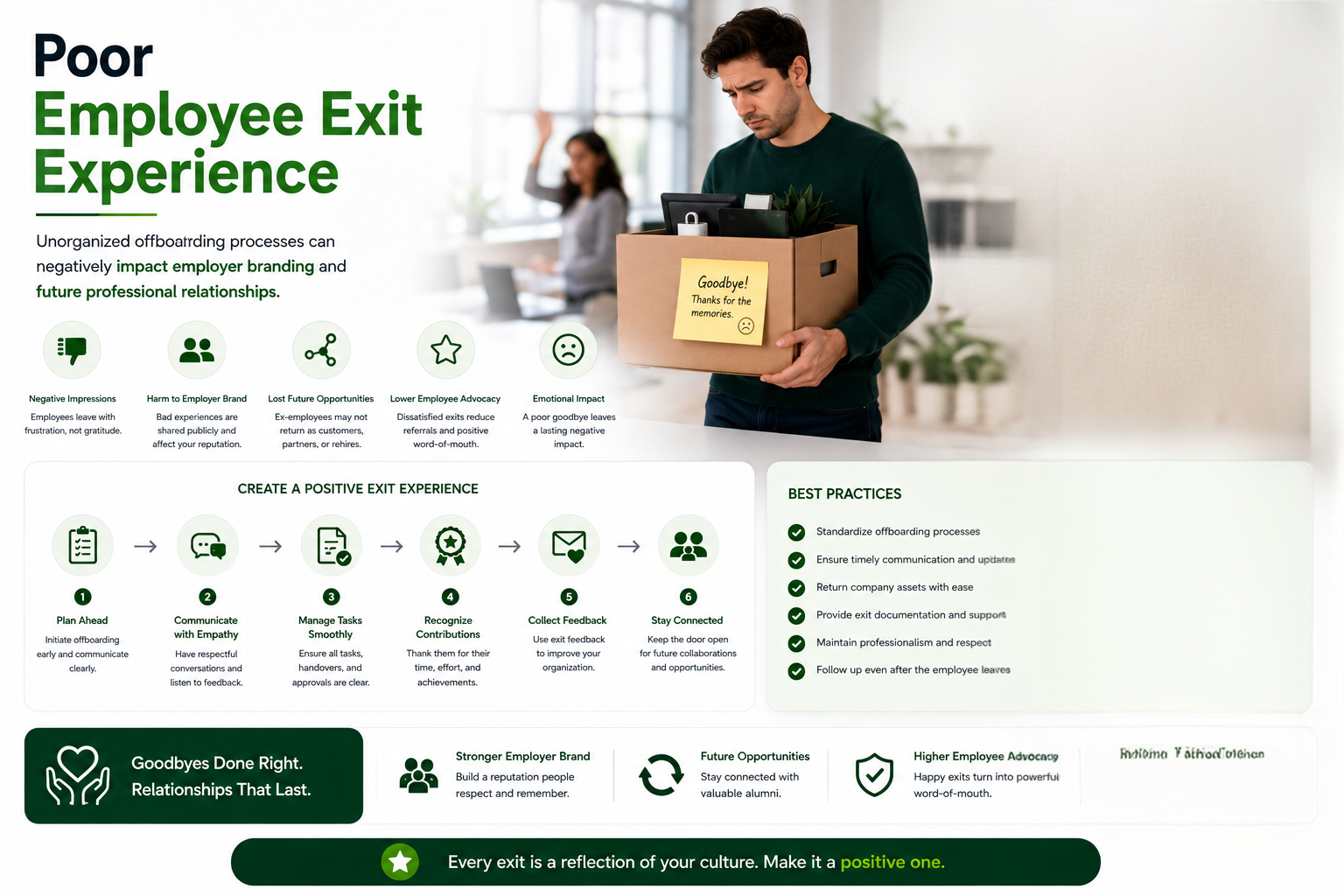
Poor Employee Exit Experience
Unorganized offboarding processes can negatively impact employer branding and future professional relationships.
Why Modern Businesses Choose HRCRM
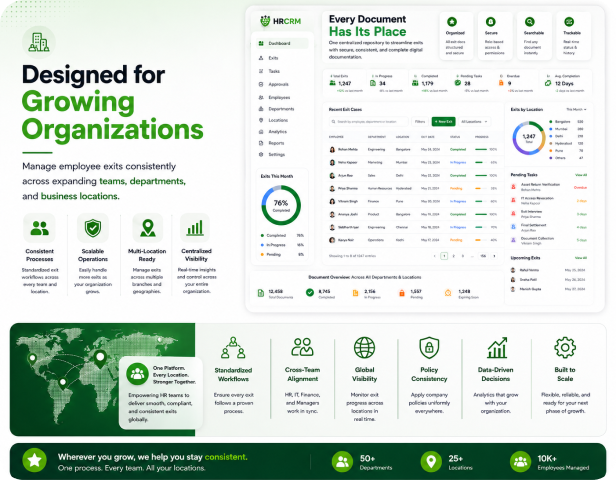
Designed for Growing Organizations
Manage employee exits consistently across expanding teams, departments, and business locations.
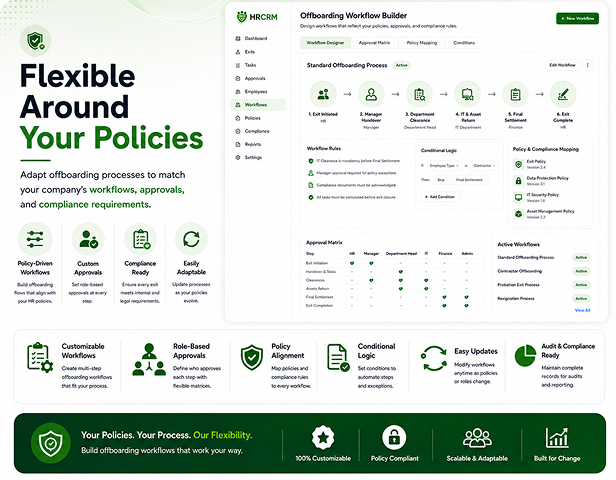
Flexible Around Your Policies
Adapt offboarding processes to match your company's workflows, approvals, and compliance requirements.
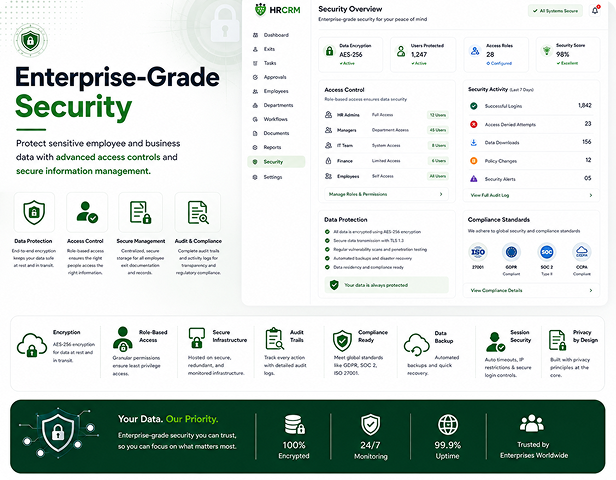
Enterprise-Grade Security
Protect sensitive employee and business data with advanced access controls and secure information management.
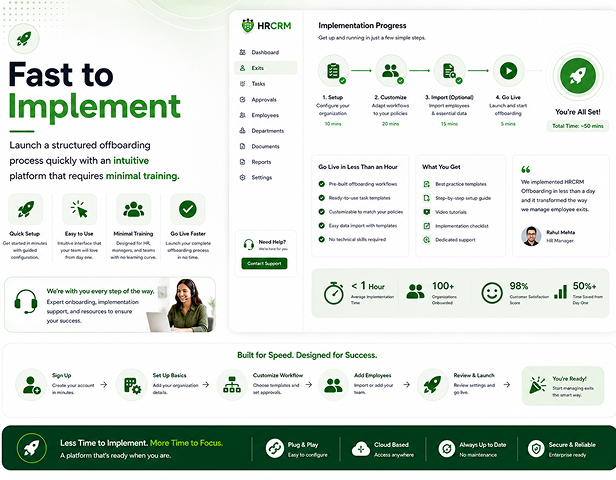
Fast to Implement
Launch a structured offboarding process quickly with an intuitive platform that requires minimal training.
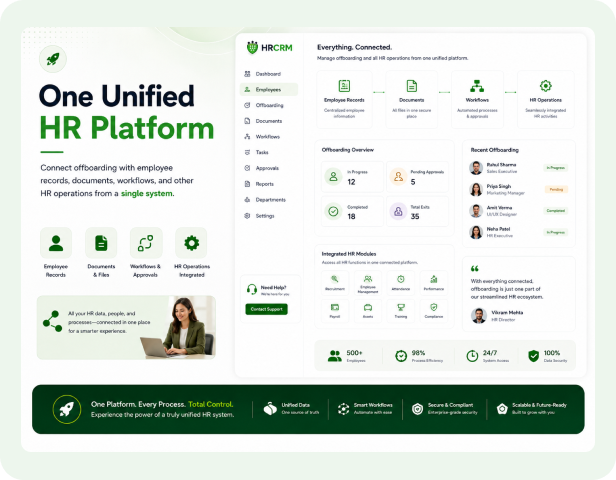
One Unified HR Platform
Connect offboarding with employee records, documents, workflows, and other HR operations from a single system.
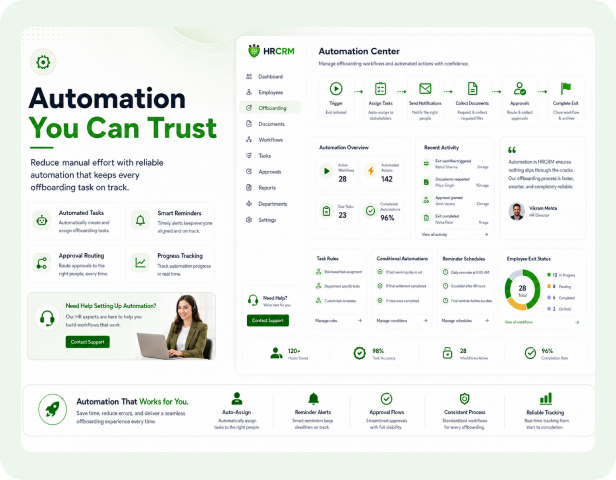
Automation You Can Trust
Reduce manual effort with reliable automation that keeps every offboarding task on track.
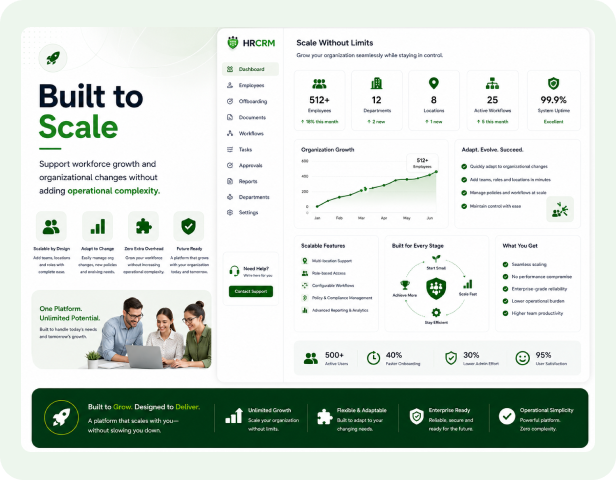
Built to Scale
Support workforce growth and organizational changes without adding operational complexity.
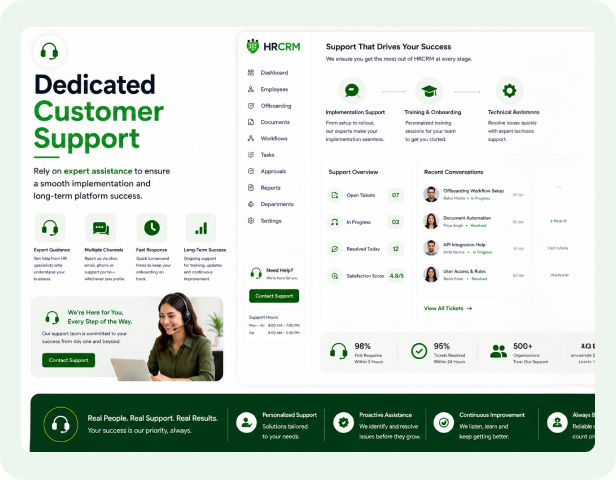
Dedicated Customer Support
Rely on expert assistance to ensure a smooth implementation and long-term platform success.
The Business Impact of Better Offboarding
Reduce security risks with structured employee exit processes.
Improve compliance with standardized offboarding procedures.
Minimize administrative effort through automated workflows.
Increase operational visibility across every employee transition.
Protect business continuity through organized knowledge transfer.
Recover company assets faster and with greater accountability.
Strengthen employer branding with professional exit experiences.
Support confident workforce planning with complete exit records.
Offboarding in Four Simple Steps
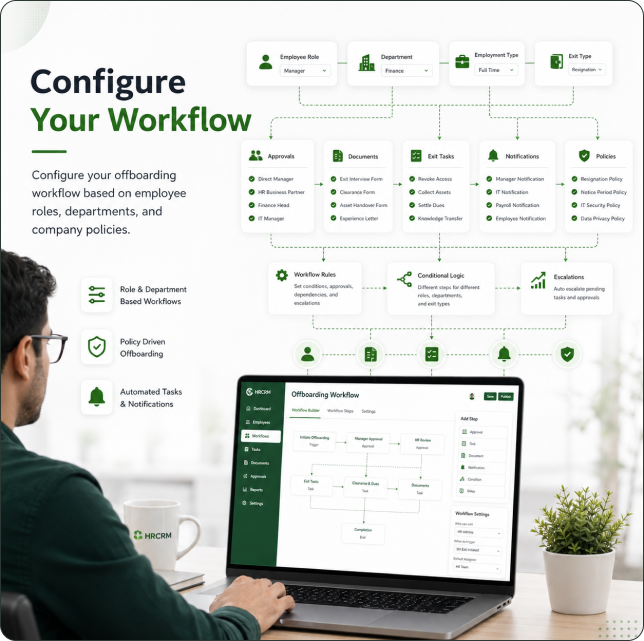
Step 1
Configure your offboarding workflow based on employee roles, departments, and company policies.
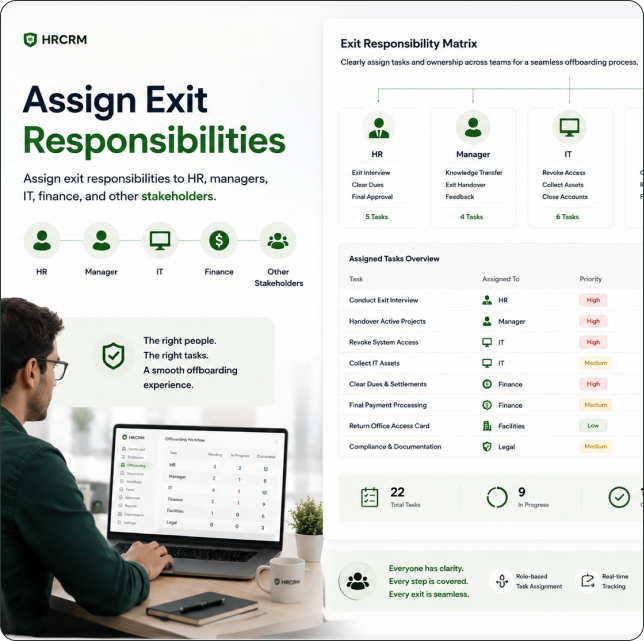
Step 2
Assign exit responsibilities to HR, managers, IT, finance, and other stakeholders.
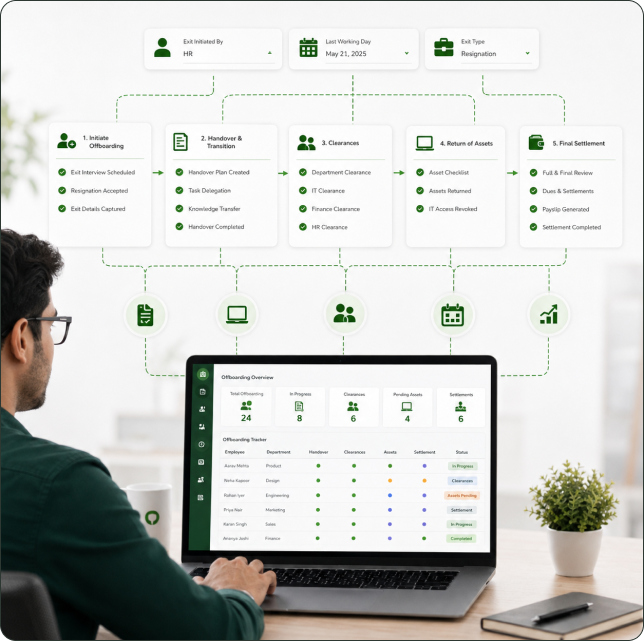
Step 3
Automate exit tasks, approvals, asset recovery, and document collection from a centralized workflow.
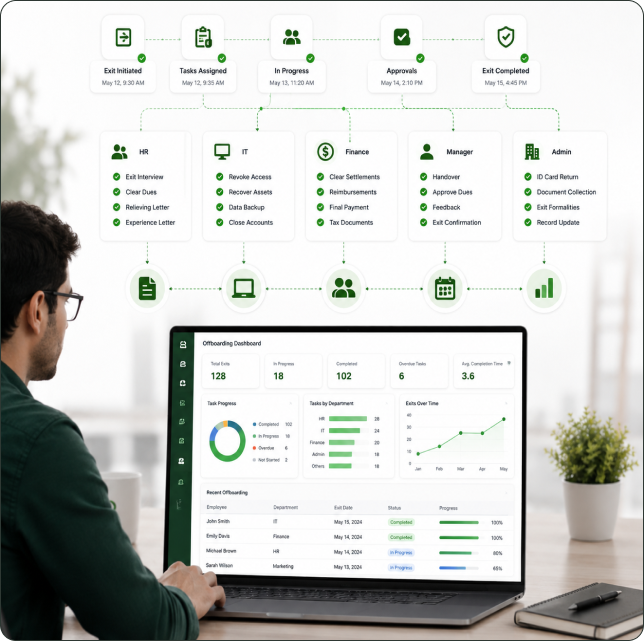
Step 4
Track every offboarding activity, complete the exit process, and maintain accurate records for future reference.
Trusted Across Every Industry
Small Businesses
Create a structured offboarding process that protects business assets and maintains professionalism.
Growing Startups
Manage increasing employee transitions with standardized exit processes that scale with your business.
Mid-Sized Companies
Improve coordination across HR, IT, finance, and managers during every employee departure.
Large Enterprises
Standardize offboarding across multiple departments, locations, and high-volume workforce transitions.
Educational Institutions
Ensure secure and compliant offboarding for faculty, administrative staff, and support teams.
Healthcare Organizations
Protect sensitive information while managing compliant employee exits across healthcare facilities.
IT & Software Companies
Secure system access, recover company assets, and protect business knowledge during employee departures.
Manufacturing Businesses
Coordinate equipment returns, access revocation, and exit documentation across operational teams.
Professional Service Firms
Maintain business continuity and safeguard client relationships through structured employee offboarding.
Build Better Workforce Transitions
Create a secure, compliant, and well-structured employee offboarding process that protects your business, preserves valuable knowledge, and ensures every workforce transition is managed with confidence.
Frequently Asked Questions
1. What is Employee Offboarding?
Employee Offboarding is the structured process of managing an employee's departure, including exit tasks, asset recovery, access revocation, documentation, and compliance to ensure a smooth and secure transition.
2. Why is employee offboarding important?
A well-managed offboarding process protects business data, ensures compliance, recovers company assets, supports knowledge transfer, and helps maintain a positive employer reputation.
3. Can HRCRM automate employee offboarding?
Yes. HRCRM automates offboarding workflows, task assignments, approvals, document management, and progress tracking, helping HR teams manage employee exits more efficiently.
4. How does HRCRM improve workforce transitions?
HRCRM standardizes employee offboarding with automated workflows, centralized tracking, and cross-functional coordination, enabling organizations to manage workforce transitions securely, consistently, and with minimal administrative effort.