
Assured Statutory Compliance, No Risk of Penalties
Streamline statutory compliance with HRCRM. Organize compliance documents, employee records, regulatory requirements, deadlines, and reporting processes.

An Intelligent Approach to Statutory Compliance
HRCRM allows businesses to streamline employee documentation, statutory needs, key deadlines, and compliance records through one simplified workflow. HR teams can ensure higher oversight of compliance processes while minimizing manual tracking.
The Key Challenges Behind Comprehensive Statutory Compliance
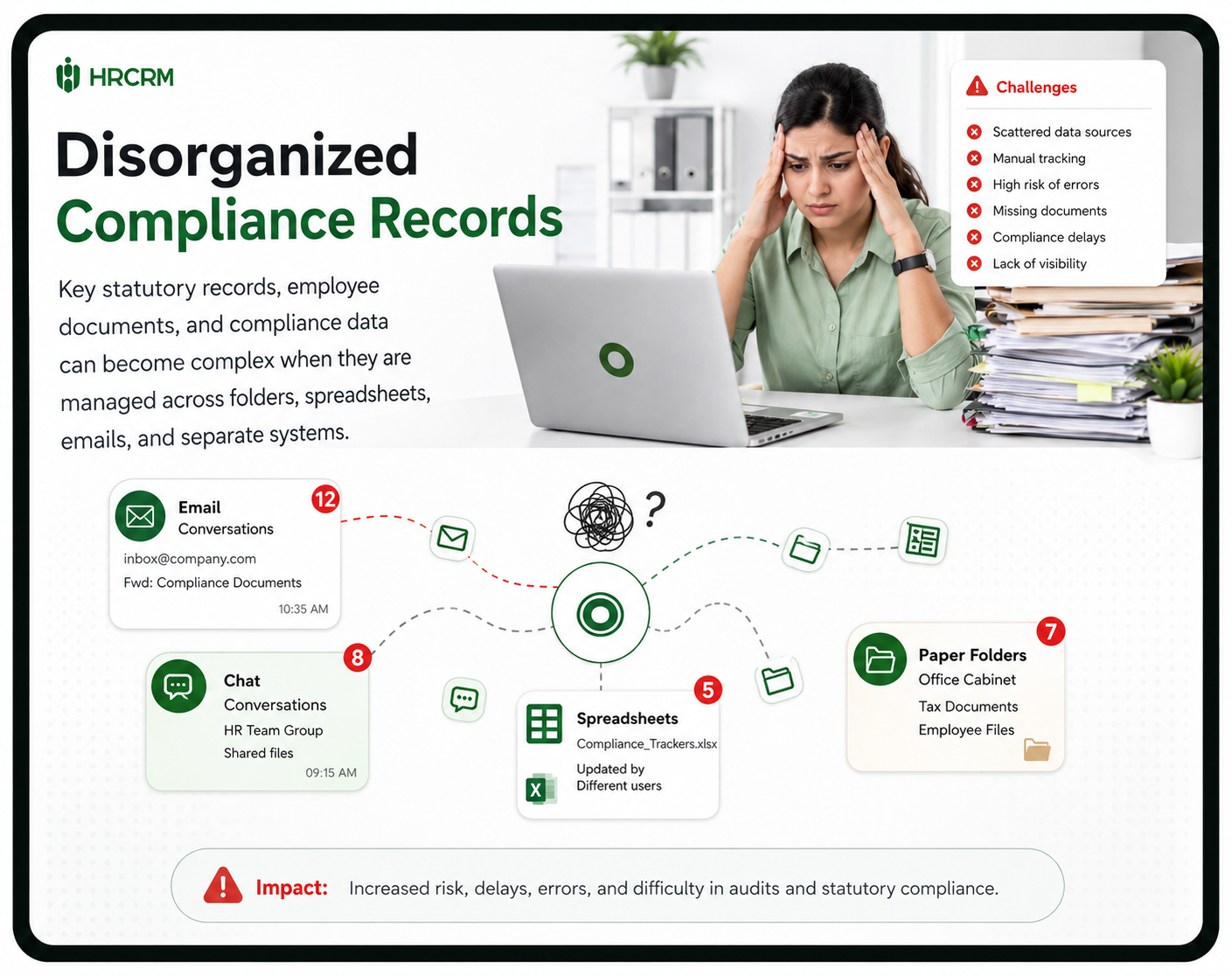
Disorganized Compliance Records
Key statutory records, employee documents, and compliance data can become complex when they are managed across folders, spreadsheets, emails, and separate systems.
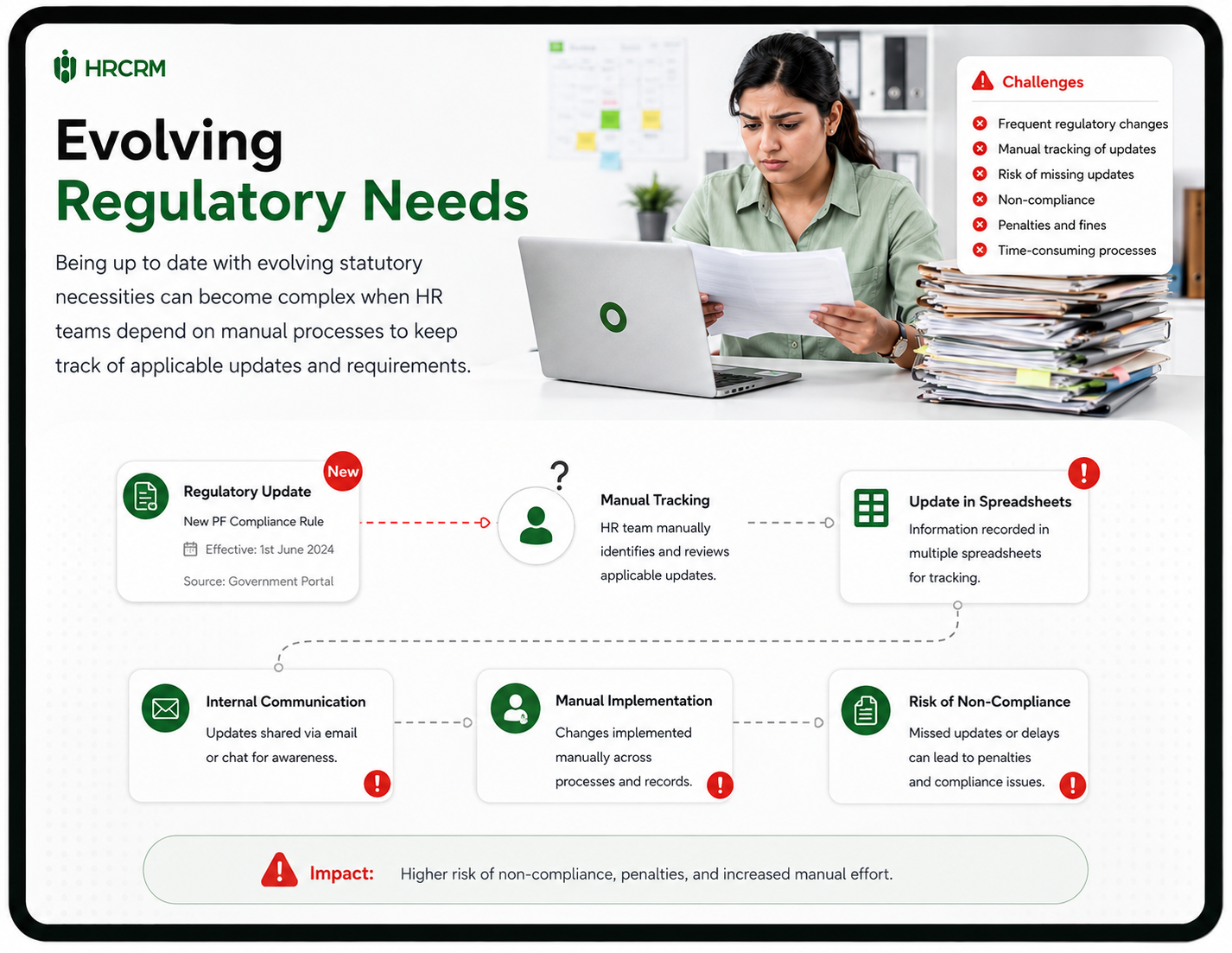
Evolving Regulatory Needs
Being up to date with evolving statutory necessities can become complex when HR teams depend on manual processes to keep track of applicable updates and requirements.
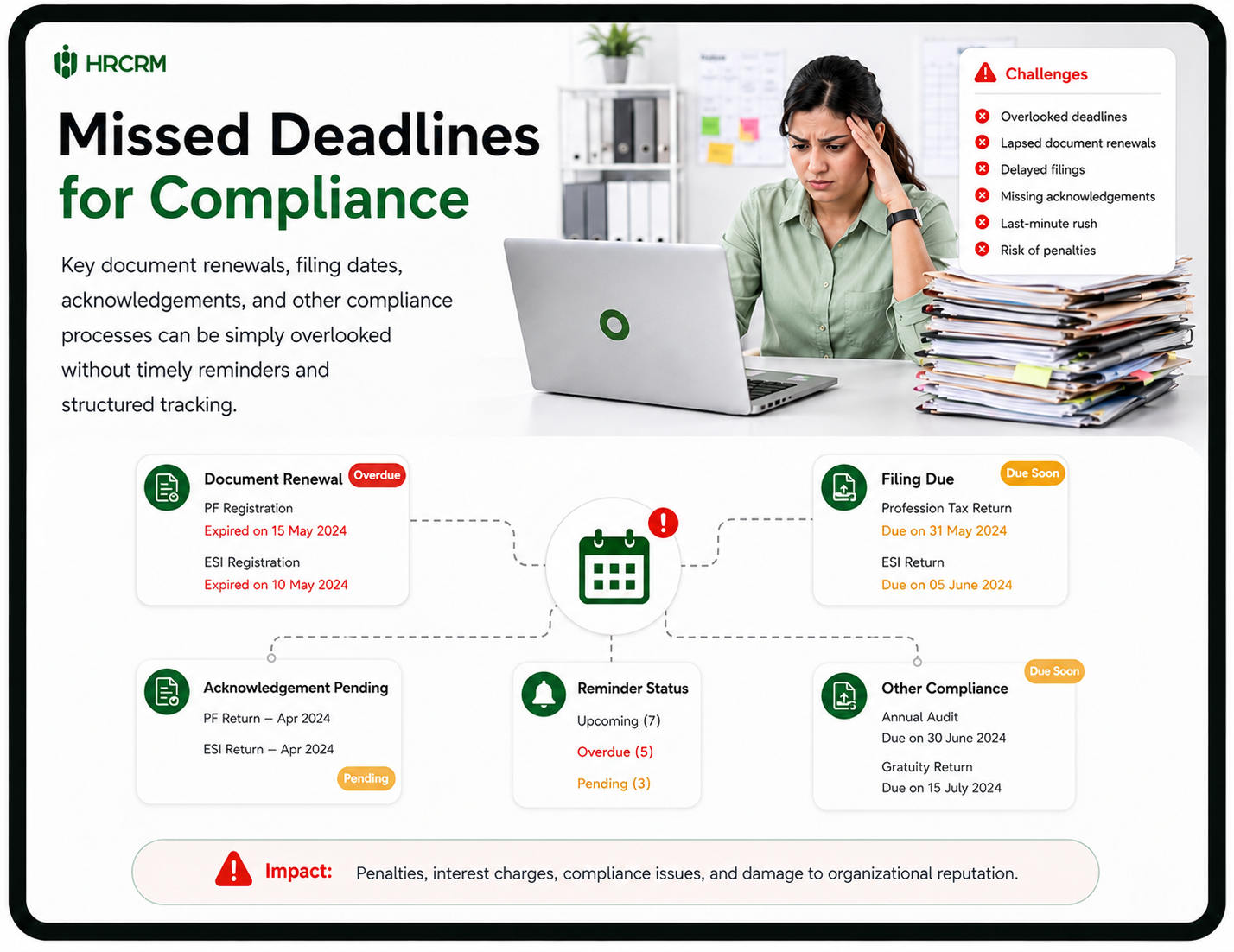
Missed Deadlines for Compliance
Key document renewals, filing dates, acknowledgements, and other compliance processes can be simply overlooked without timely reminders and structured tracking.
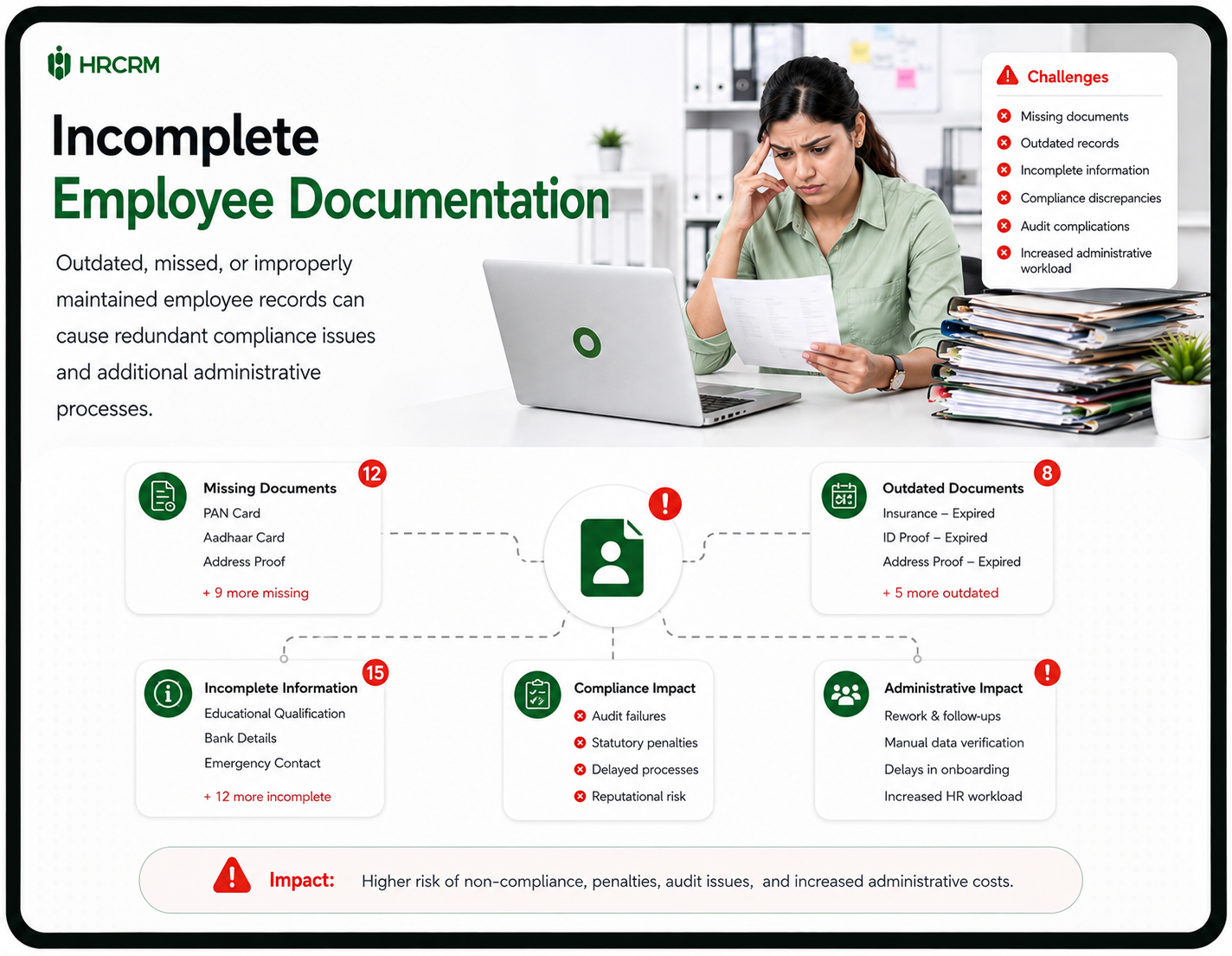
Incomplete Employee Documentation
Outdated, missed, or improperly maintained employee records can cause redundant compliance issues and additional administrative processes.
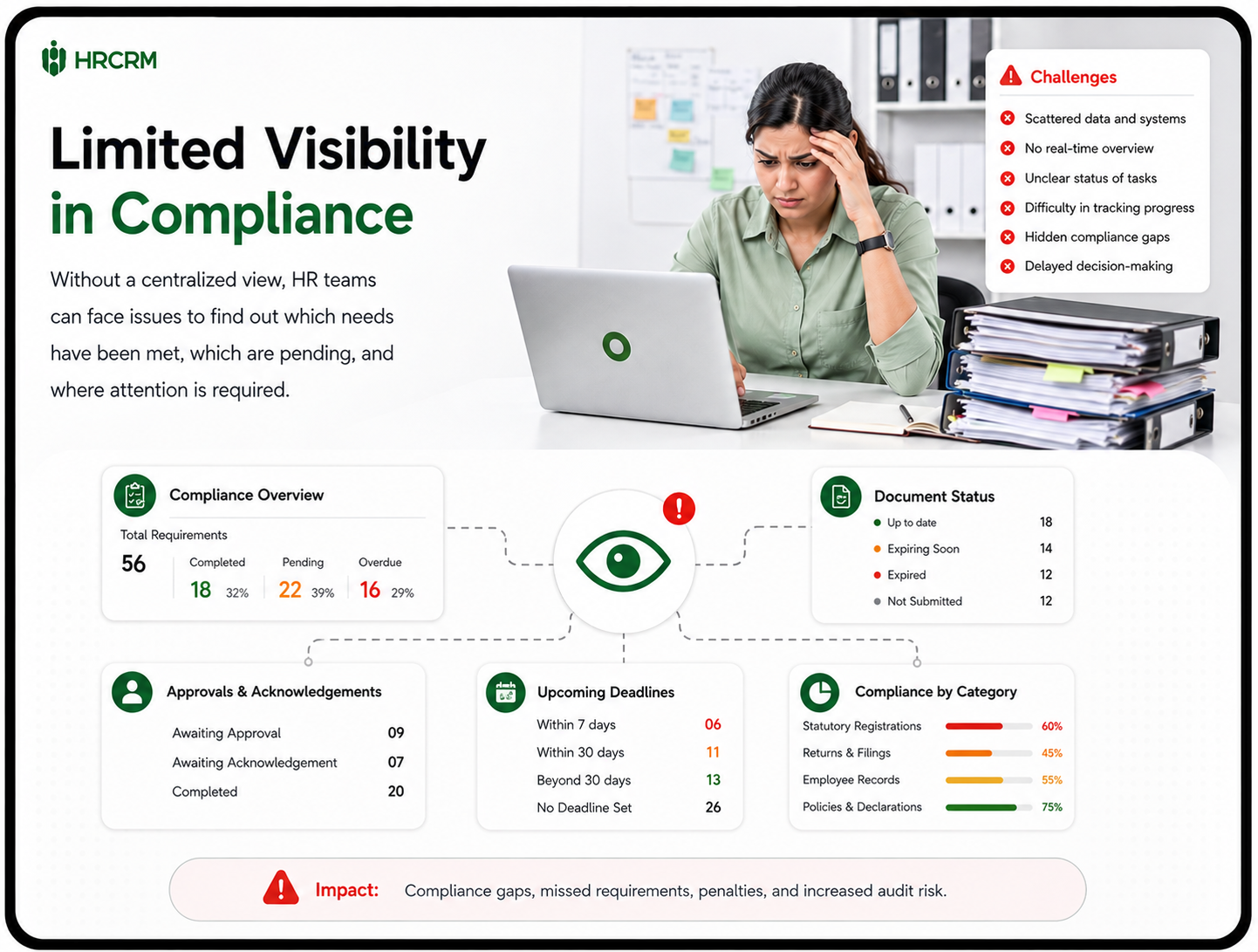
Limited Visibility in Compliance
Without a centralized view, HR teams can face issues to find out which needs have been met, which are pending, and where attention is required.
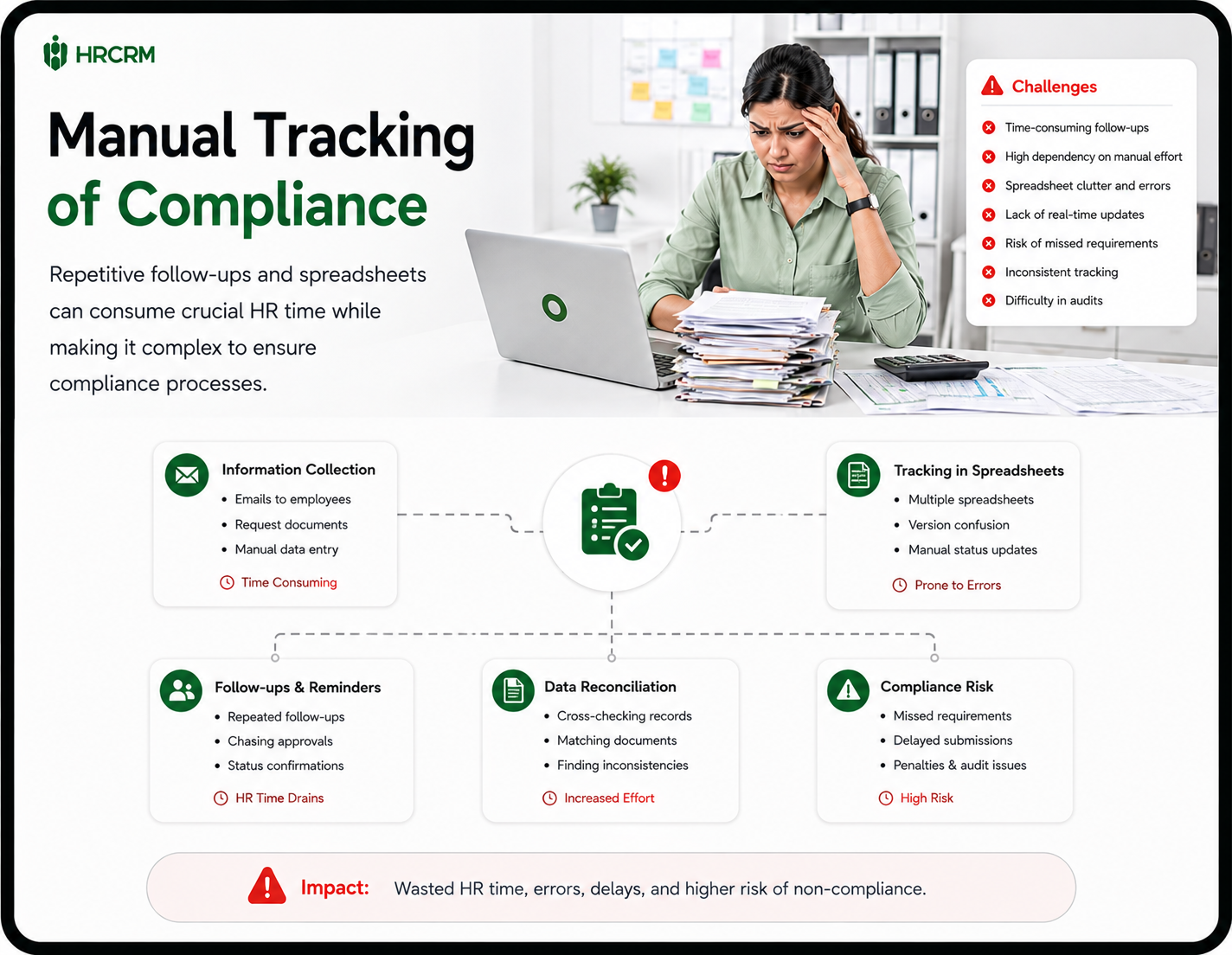
Manual Tracking of Compliance
Repetitive follow-ups and spreadsheets can consume crucial HR time while making it complex to ensure compliance processes.
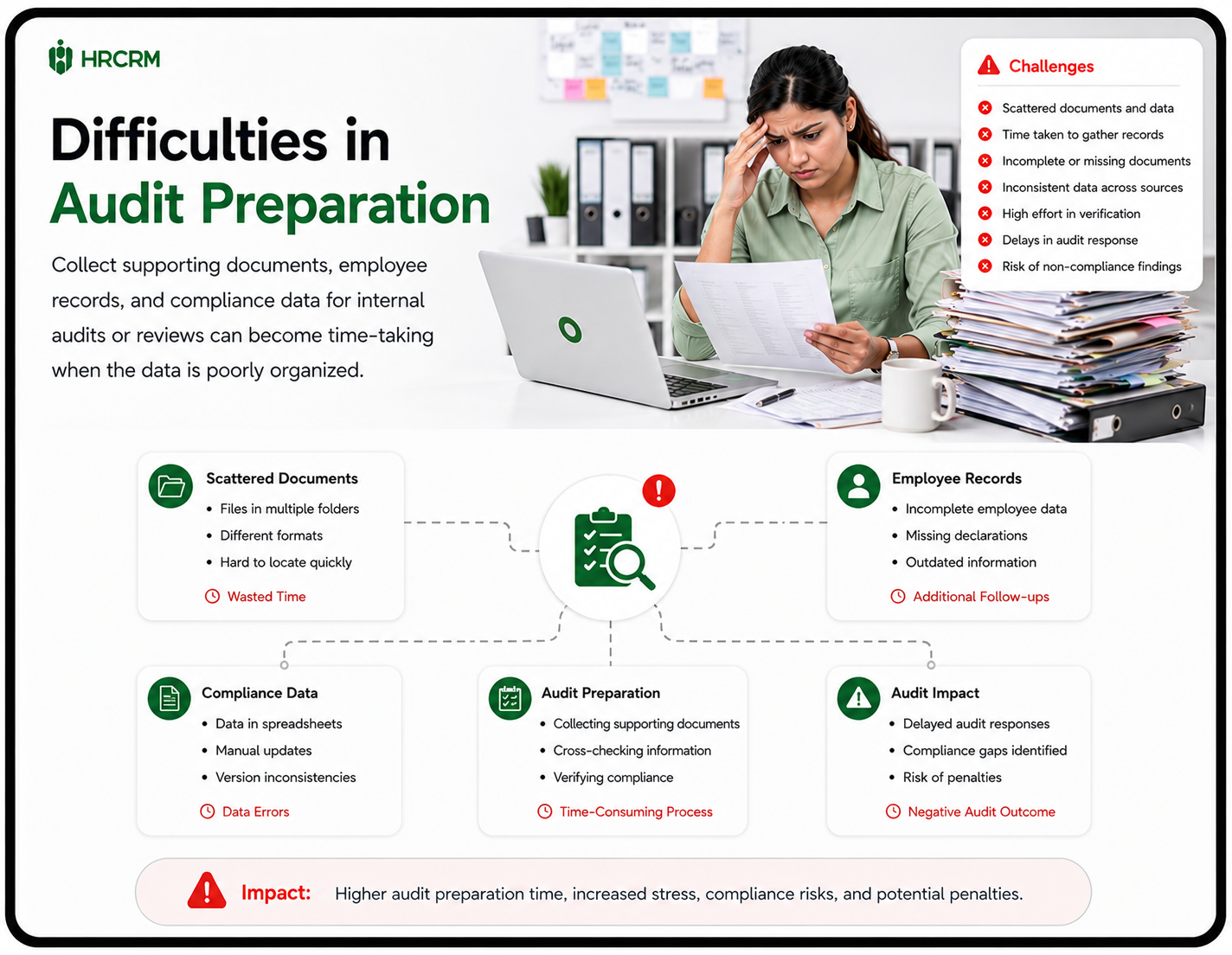
Difficulties in Audit Preparation
Collect supporting documents, employee records, and compliance data for internal audits or reviews can become time-taking when the data is poorly organized.
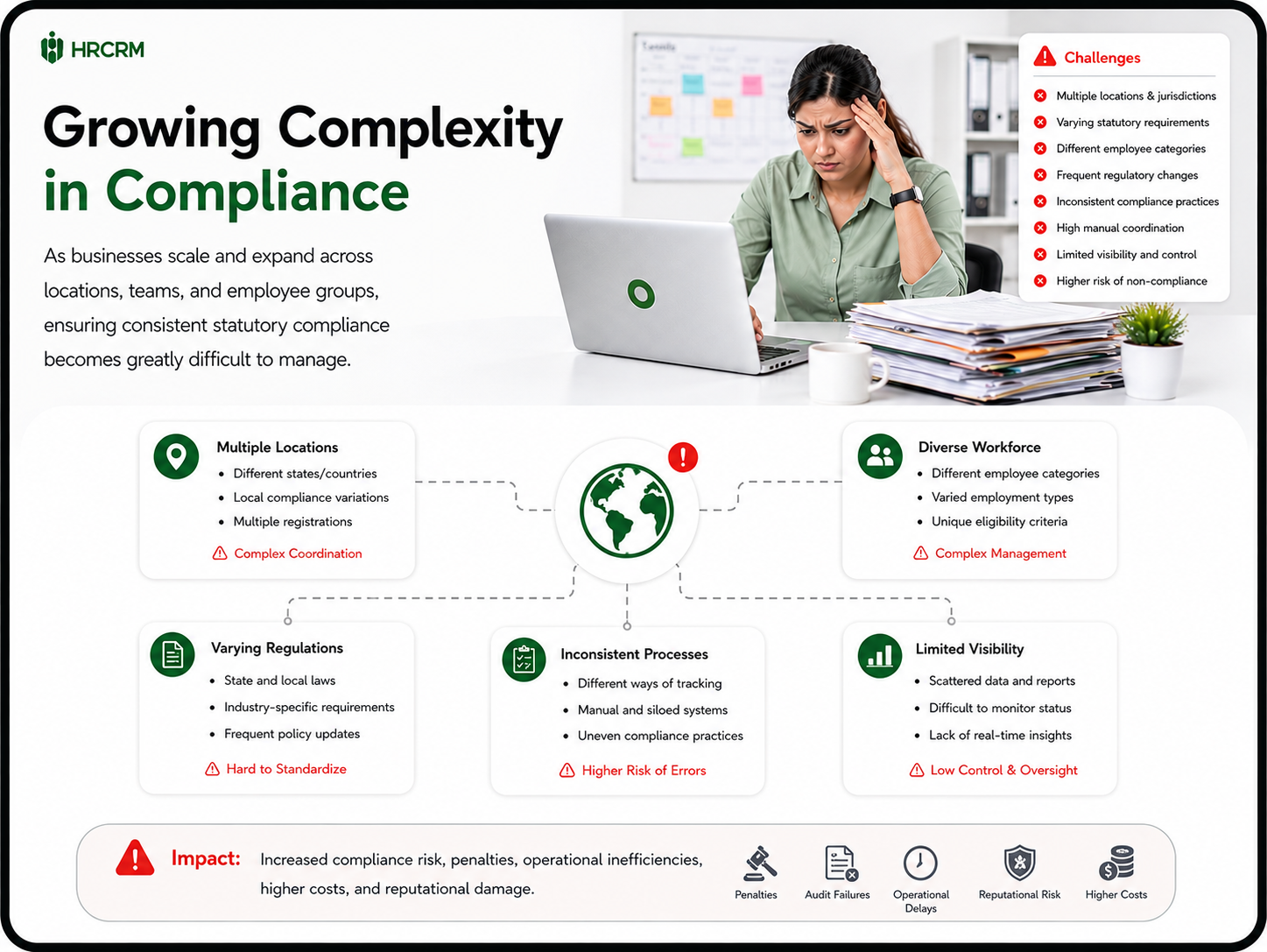
Growing Complexity in Compliance
As businesses scale and expand across locations, teams, and employee groups, ensuring consistent statutory becomes greatly difficult to manage.
Statutory Compliance, Powered by HRCRM
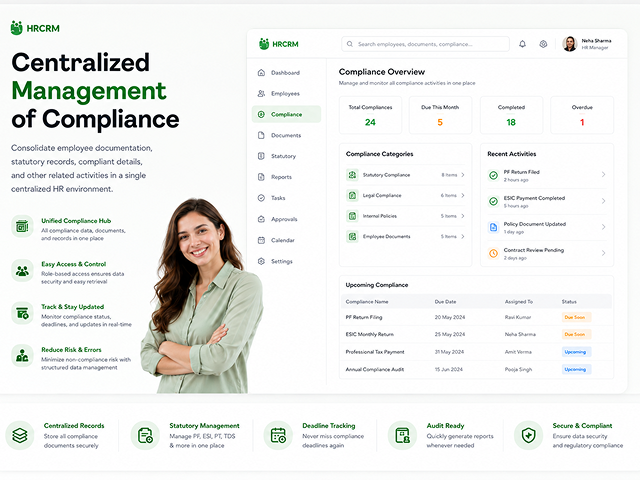
Centralized Management of Compliance:
Consolidate employee documentation, statutory records, compliant details, and other related activities in a single centralized HR environment.
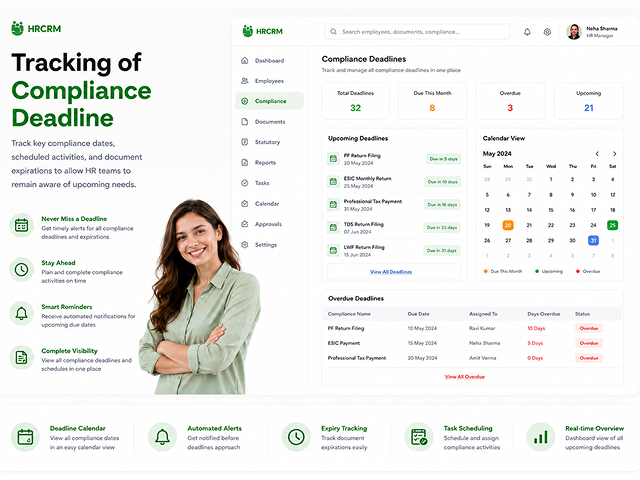
Tracking of Compliance Deadline:
Tracking key compliance dates, scheduled activities, and document expirations to allow HR teams to remain aware of upcoming needs.
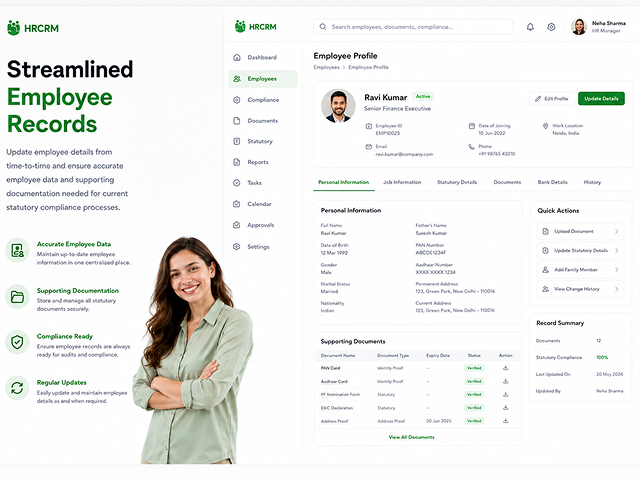
Streamlined Employee Records:
Update employee details from time-to-time and ensure accurate employee data and supporting documentation needed for current statutory compliance processes.
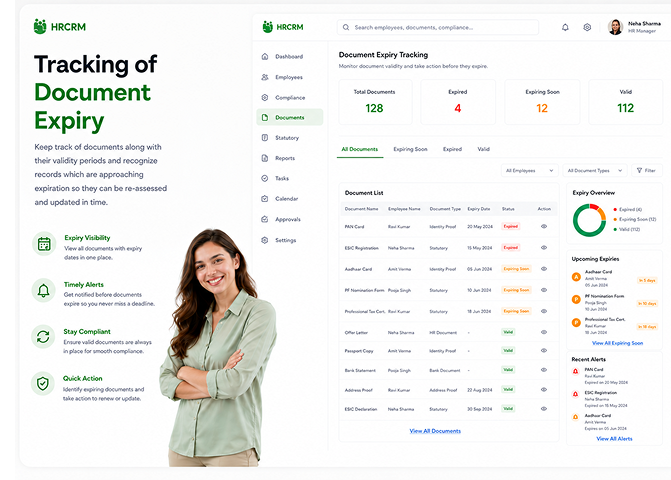
Tracking of Document Expiry:
Keep track of documents along with their validity periods and recognize records which are approaching expiration so they can be re-assessed and updated in time.
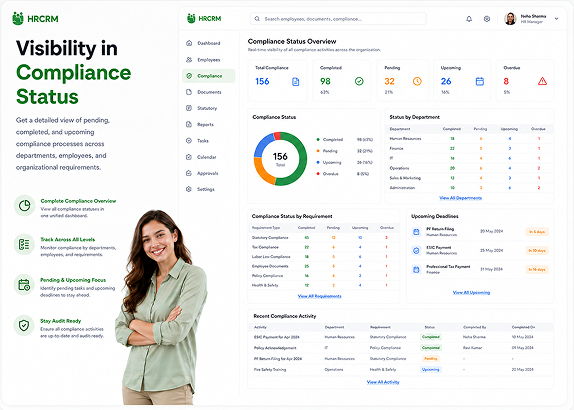
Visibility in Compliance Status:
Get a detailed view of pending, completed, and upcoming compliance processes across departments, employees, and organizational requirements.
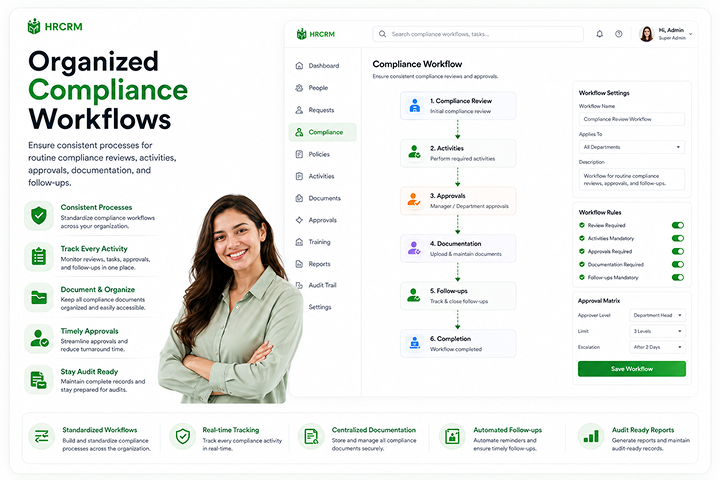
Organized Compliance Workflows:
Ensure consistent processes for routine compliance reviews, activities, approvals, documentation, and follow-ups.
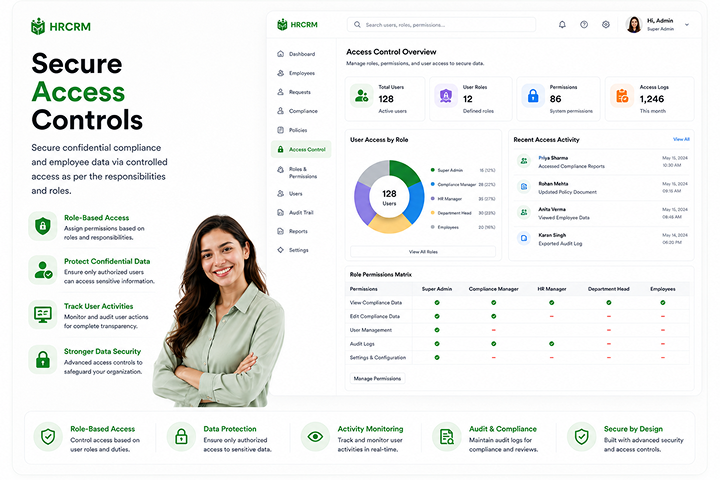
Secure Access Controls:
Secure confidential compliance and employee data via controlled access as per the responsibilities and roles.
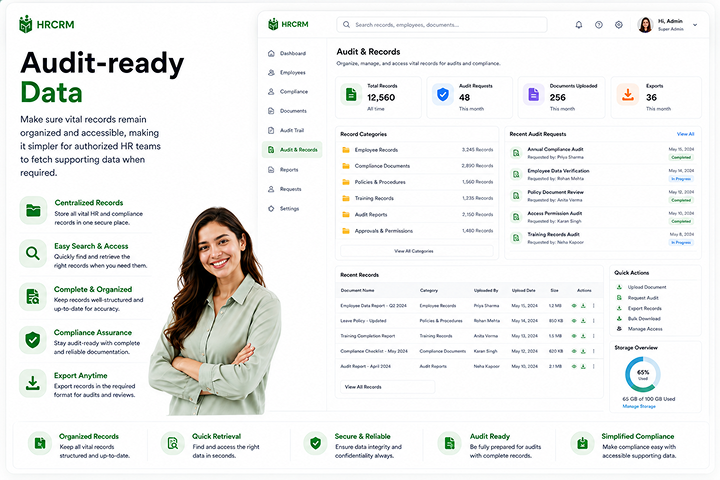
Audit-ready Data:
Make sure vital records remain organized and accessible, making it simpler for authorized HR teams to fetch supporting data when required.
The Key Business Advantages of Statutory Compliance
Less Risk of Compliance: Ensure more organized records and consistent processes related to incomplete documentation and missed requirements.
Less Manual Monitoring: Minimize routine follow-ups, spreadsheets, and administrative effort related to tracking statutory compliance processes.
Higher Visibility in Compliance: Provide HR teams with a comprehensive understanding of completed, pending, and upcoming compliance processes across the business.
Scalable Management of Compliance: Provide support to additional teams, growing employee populations, and expanding operations without completely depending on manual compliance tracking.
Higher Accuracy in Records: Accurately manage compliance and employee details in a structured way to provide support to more dependable HR administration.
More Consistent Processes: Set up standardized compliance workflows that allow HR teams to handle repetitive statutory activities systematically.
Quicker Preparation for Audits: Fetch appropriate employee records as well as their support documents whenever you need for reviews or audits, minimizing last-minute hassle.
Enhance Productivity of Your HR Team: Allow your HR department to spend less time on coordinating repetitive compliance processes and more time on strategic workforce goals.
Get Your Request Process Up and Running
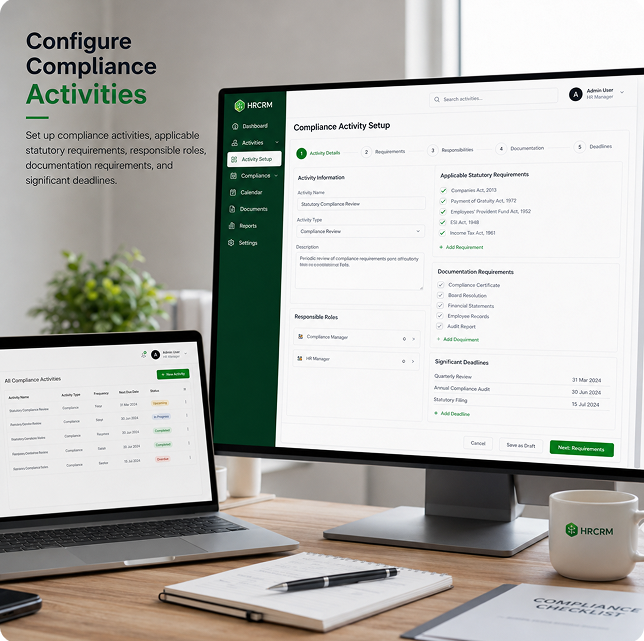
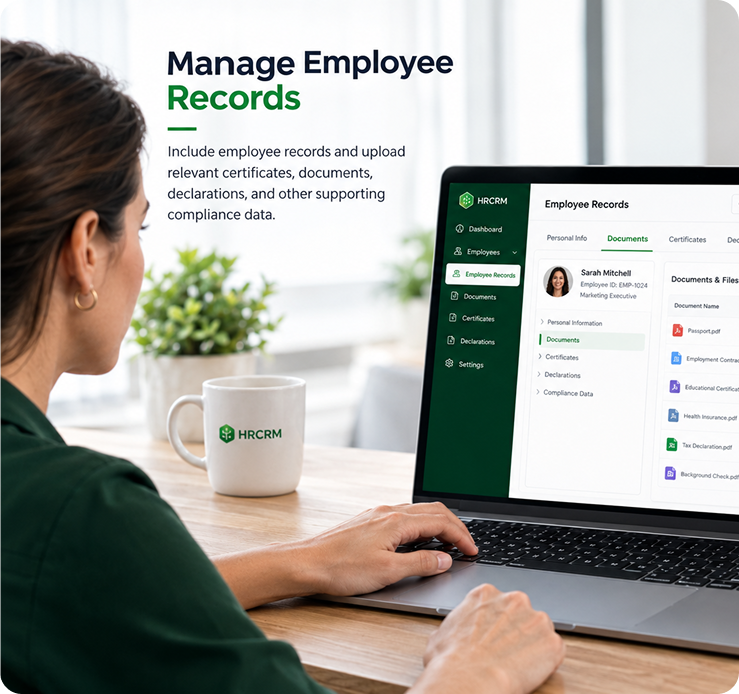
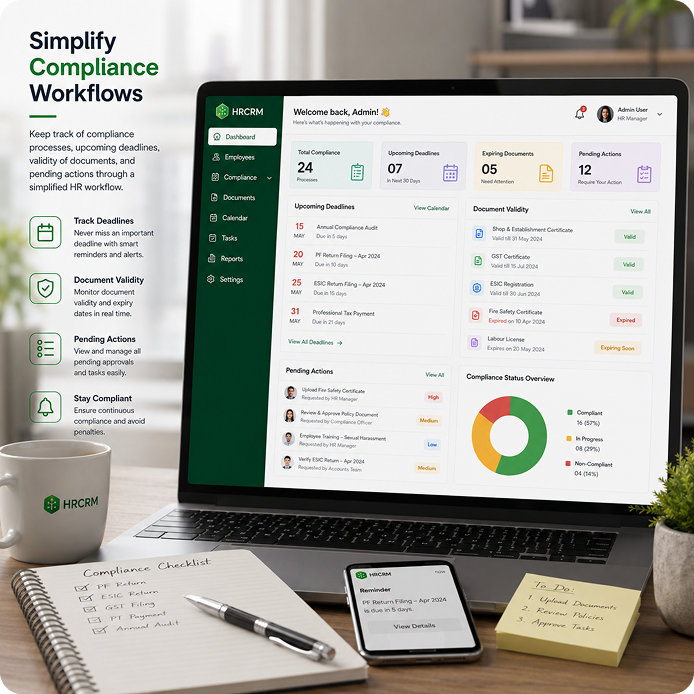
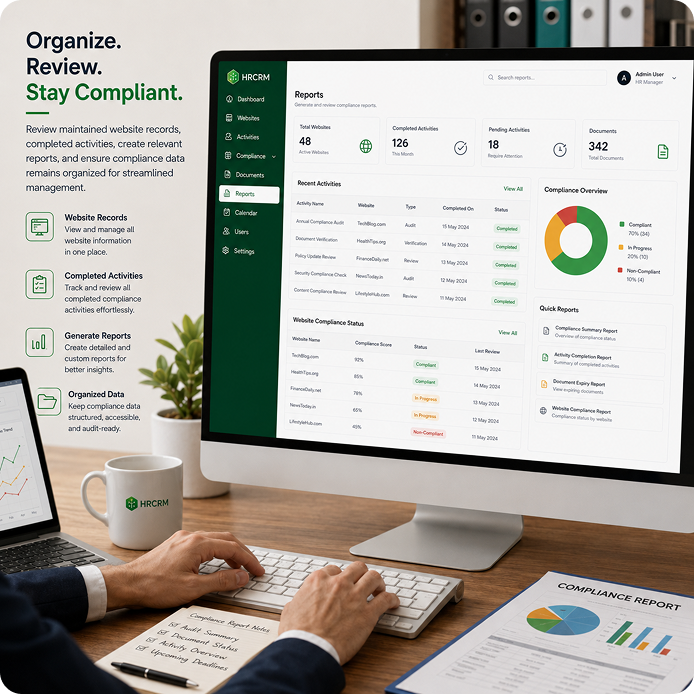
Step 1
Set up compliance activities, applicable statutory requirements, responsible roles, documentation requirements, and significant deadlines.
Step 2
Include employee records and upload relevant certificates, documents, declarations, and other supporting compliance data.
Step 3
Keep track of compliance processes, upcoming deadlines, validity of documents, and pending actions through a simplified HR workflow.
Step 4
Review maintained website records, completed activities, create relevant reports, and ensure compliance data remains organized for reviews or audits.
Statutory Compliance That Grows with Your Business
Small Businesses:
Set up organized statutory compliance processes without including redundant administrative complexity to daily HR processes.
Growing Startups:
Generate dependable compliance practices as the number of employees increases, and HR responsibilities become increasingly complex.
Mid-level Businesses:
Ensure higher structure and visibility to employee documentation, statutory records, deadlines, and repetitive compliance processes.
Large Organizations:
Handle wide employee records and compliance needs across distinct teams, departments, business units, and locations.
Educational Institutions:
Streamline employee documentation and daily statutory compliance processes across administrative, faculty, and support teams.
Healthcare Businesses:
Ensure organized compliance records across distinct employee groups while providing support to the documentation requirements of a demanding workforce ecosystem.
IT and Software Businesses:
Supporting evolving as well as distributed teams with simplified statutory records, secure employee documentation, and compliance tracking.
Manufacturing Businesses:
Handle statutory documentation and repetitive compliance processes across production facilities, offices, and operational teams.
Professional Service Firms:
Ensure organized employee compliance data as well as documentation across advisors, consultants, administrative teams, and business functionalities.
Make Your Compliance Process Clear and Confident
Provide your HR team with an organized way to handle statutory needs, documentation, employee records, and compliance processes. Check out how HRCRM can improve consistency, visibility, and control with your current compliance processes.
Frequently Asked Questions
What is statutory compliance in HR processes?
Statutory compliance is the process that businesses follow to align with regulatory and legal needs associated with employee documentation, employees, benefits, payroll, and workplace obligations.
How can HRCRM help with statutory compliance?
HRCRM assists in organizing compliance documents, employee records, recurring activities, deadlines, and relevant workflows so HR teams can handle statutory needs more systematically.
Can HRCRM keep track of statutory compliance deadlines?
Yes. HRCRM can allow businesses to easily manage key compliance dates, repetitive activities, document expirations, and pending actions, so HR teams have higher visibility into future requirements.
Can you customize statutory compliance requirements?
Yes. Documentation requirements, compliance activities, access permissions, and tracking processes must be customized as per their organizational needs.