
The article explores what an employee database is, what its key benefits and features are, and the best practices that businesses should follow when implementing one.
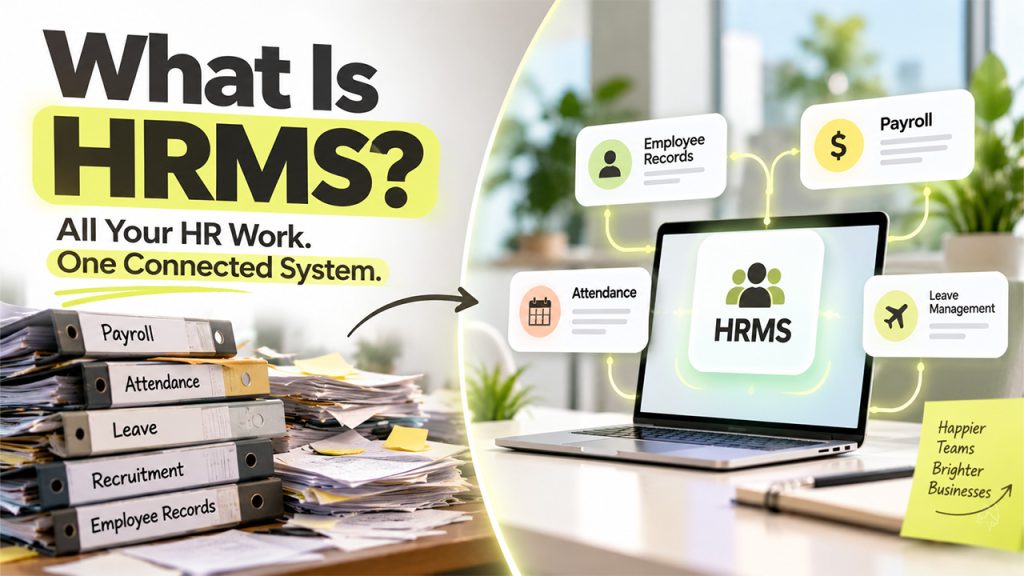
Managing employee information is among the most essential elements of running any organization. Businesses can handle a significant amount of employee data every day, from basic contact details and job roles to attendance, performance records, and payroll information. When this information is scattered across multiple platforms, such as spreadsheets, emails, paper files, and different systems, it can become difficult quickly. This is where an employee database comes into play.
An employee database is a tool that offers a centralized place to store, organize, update, and access employee information. The tool helps HR teams reduce administrative work significantly, along with improving data accuracy and making better workforce decisions. The platform can also help automate various types of routine HR processes and support more effective employee information management, especially when it is combined with the right employee database software.
What is an Employee Database?
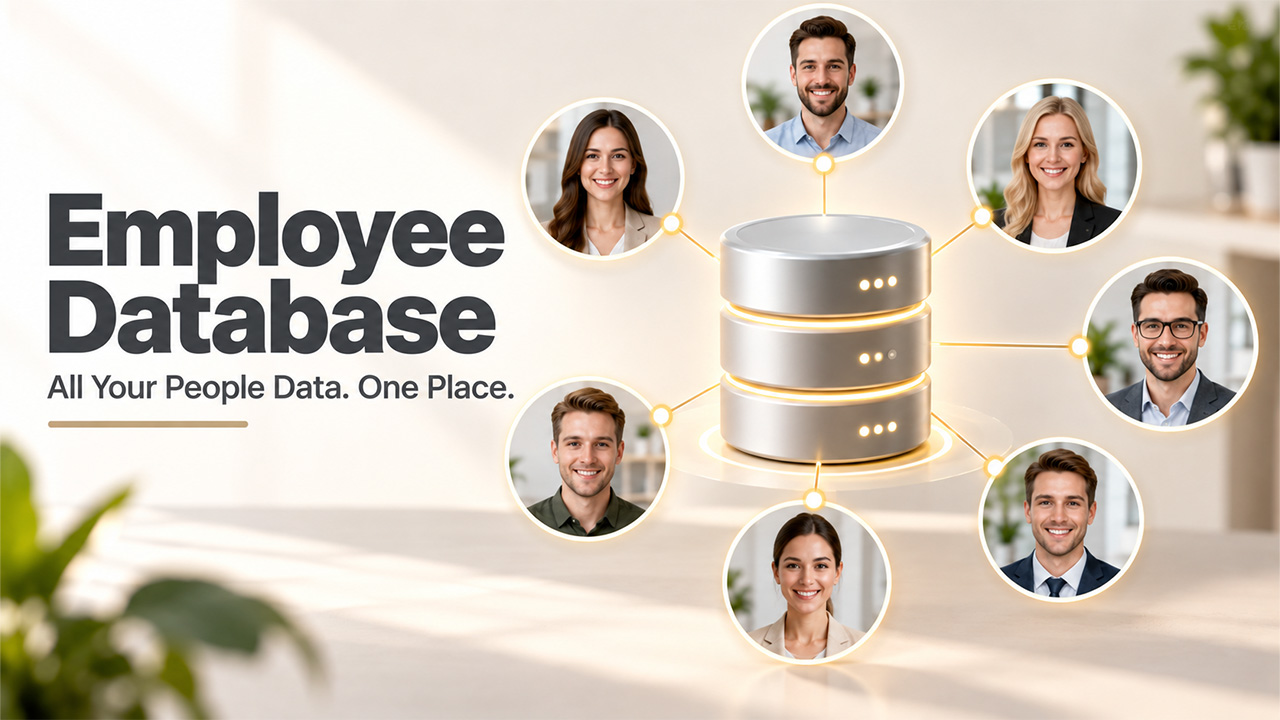
An employee database is a centralized system that is generally used by an organization to store, organize, manage, and access employee information from a single place. Through the system, businesses can use an employee database to maintain structured and up-to-date records, instead of keeping employee records across spreadsheets, paper files, emails, or multiple disconnected systems.
An employee database can contain various key information, such as:
- Employee name, contact details, and employee ID
- Job title, department, and manager
- Joining date and employment history
- Salary and benefits information
- Attendance and leave records
- Skills, qualifications, and certifications
- Performance and training records
- Emergency contact details
- Employment-related documents
The modern employee database software also goes beyond basic data storage by offering features such as search and filtering, document management, reporting, access controls, and integrations with other HR systems.
Benefits of Employee Database
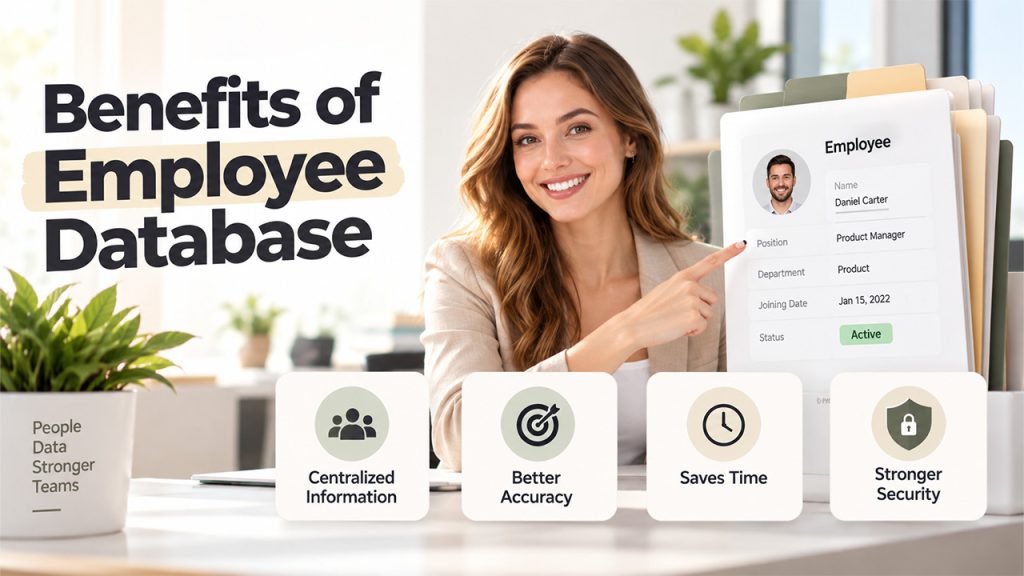
An employee database enables organizations to store and manage employee information in a centralized, secure, and structured way. HR teams can access important employee information from a single system, instead of relying on paper records, spreadsheets, or scattered files.
Some of the key benefits of an employee database are as follows:
Centralized Employee Information
With an employee database solution, HR teams can easily access various details, such as employee contact information, job title, department, joining date, employment history, and other relevant records.
Improve Data Accuracy
The solution offers a structured way to update and maintain employee information. It also keeps all the records in a centralized system, helping HR teams to work with more accurate and consistent data.
Saves Time and Increases HR Efficiency
The solution allows HR professionals to quickly search, filter, update, and retrieve records. It can also automate routine processes, reducing repetitive administrative tasks.
Enhanced Data Security
Employee records can contain various sensitive personal and employment information. It also provides security features, such as role-based access, authentication, permissions, encryption, and audit logs.
Key Features of Employee Database
All employee database solutions are not similar to each other. The features of the solution mainly depend on the Core HR requirements of an organization. Some of the key features of employee database solutions that businesses should consider are as follows:
Employee Profiles:
Profiles of all employees form the foundation of an employee database. The profile should provide a structured overview of relevant information.
Search and Filtering:
A useful database should offer a quick and straightforward way of finding employee information.
Document Management:
An employee database solution with document management capabilities can store key employee-related documents, including contracts, certifications, policy acknowledgments, and training records associated with the appropriate employee profile.
Role-Based Access:
Role-based permissions allow organizations to control who can view, edit, or manage specific types of information.
Integration Capabilities:
A modern employee database should work efficiently alongside various core HR tools, such as payroll, accounting, recruitment, attendance, and performance management.
Employee Database vs Spreadsheets
Many small businesses generally start managing employee information in spreadsheets. While spreadsheets can work basic record-keeping, they can become difficult to maintain as the workforce grows.
Spreadsheets may lack advanced permissions, automated workflows, audit trails, integration, and centralized document management. While an employee database solution, especially one supported by dedicated software, is generally designed for structured employee information management.
A quick comparison between Employee Database and Spreadsheets are as follows:
| Features | Employee Database | Spreadsheets |
| Data Organization | Structured employee records in a centralized system. | Information is organized in rows, columns, and separate sheets. |
| Scalability | Suitable for growing organizations and larger employee datasets. | Can become difficult to manage as data grows. |
| Data Accuracy | Maintain consistent and structured records. | Prone to manual errors and duplicate entries. |
| Search and Filtering | Advanced search filtering capabilities. | Basic sorting and filtering. |
| Data Security | Can offer role-based access, permissions, authentication, and audit trails. | Security options are generally more limited. |
| Multiple Users | Designed for multiple users with different access levels. | Collaboration requires complex permissions. |
| Automation | Offers easy automation of various HR workflows. | Requires formulas, macros, and additional tools. |
| Employee Profiles | Features dedicated profiles for individual employees. | Requires manual structured rows or sheets. |
Best Practices for Managing an Employee Database
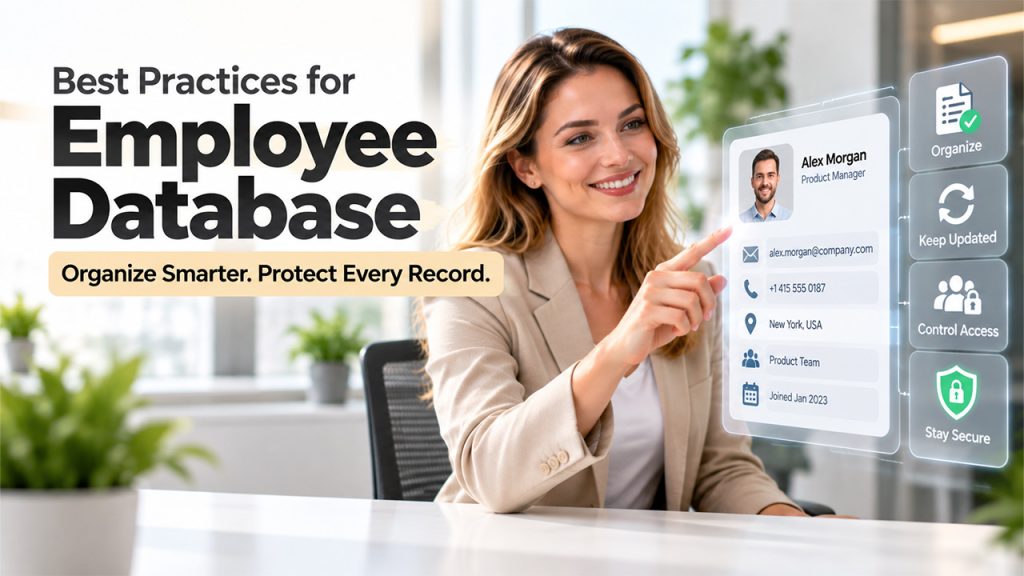
While implementing an employee database, organizations need processes to keep employee information accurate, secure, and useful. Some of the key factors to consider while managing an employee database are as follows:
Define What Information is Needed:
Before creating a database, the organization needs to clearly define which employee information is needed to collect.
Standardize Data:
Businesses need to establish consistent formats for employee information. Consistent data helps make searching, reporting, and analysis more reliable.
Keep Records Updated:
Organizations should create clear processes for updating records, as employee information can quickly become outdated.
Control Access:
Businesses should use role-based permissions and also need to review access rights regularly. Employee information should only be accessible to authorized users.
Protect Sensitive Information:
Organizations should implement appropriate security measures to protect employee data from any unauthorized access, accidental loss, or misuse. Businesses should also ensure that their employee data practices comply with applicable privacy and employment regulations.
Conclusion
An employee database solution offers businesses a centralized and efficient way to manage employee information, while also improving accuracy, security, and HR productivity. The right employee database software helps organizations streamline employee information management, simplify everyday HR processes, and make more informed workforce decisions. Businesses can also build a reliable employee database that can support both their current HR needs and future growth. Investing in a well-structured employee database solution can be among the most essential steps toward creating a more efficient, organized, and data-driven workplace, especially for organizations looking to modernize their HR operations.
Frequently Asked Questions
Why is an Employee Database important for businesses?
An employee database solution helps businesses efficiently manage employee information accurately. The solution also reduces reliance on spreadsheets and disconnected records, providing faster access to information, improving data organization, supporting reporting, and helping protect sensitive employee data.
How does an Employee Database improve Employee Information Management?
An employee database solution provides a structured and centralized way to manage employee information. It also helps HR teams maintain accurate records, update information efficiently, control access, organize documents, and retrieve employee data when needed.
How does an Employee Database help HR teams save time?
An employee database solution allows HR professionals to quickly search, update, filter, and retrieve employee records from a centralized system.
Is an Employee Database more secure than a spreadsheet?
Yes, an employee database is more secure than a spreadsheet. An Employee Database can provide stronger security and access controls than a basic spreadsheet, depending on the software used and how it is configured.