
Clarity for HR. Flexibility
for Employees.
Empower employees with smarter Leave Management that makes time-off requests, approvals, leave balances, and absence tracking effortless, while helping HR maintain visibility across the workforce.

0% Complete
4 documents pending
Trusted by 1,600+ Companies Worldwide
The HR Infrastructure Behind Smarter Leave Management
Effective Leave Management gives employees the freedom to plan time away while keeping HR teams informed and operations on track. HRCRM brings leave requests, approvals, leave balances, absence records, and team availability into one streamlined experience, helping businesses manage time off with greater clarity and confidence.
The Hidden Cost of
Unstructured Leave
Management
HRCRM brings employee engagement into everyday work, helping businesses create stronger connections, encourage participation, and build a workplace people want to be part of.

Manual Leave Tracking
Spreadsheets and manual records make it difficult to maintain accurate leave balances and absence histories.

Unclear Leave Availability
Employees and managers may struggle to see available leave or understand how time off affects team capacity.

Approval Delays
Requests can sit in inboxes or get overlooked, creating unnecessary delays for employees and managers.

Inaccurate Leave Balances
Manual calculations can result in incorrect balances, disputes, and additional HR administration.

Poor Workforce Visibility
HR and managers may lack a clear view of upcoming absences across teams, departments, or locations.

Inconsistent Leave Policies
Different teams may interpret or apply leave policies inconsistently, creating confusion and fairness concerns.

Excessive Administrative Work
HR teams spend valuable time answering routine leave queries, updating records, and following up on approvals.
The Building Blocks of Better Leave Planning
From tracking time away to keeping everyone aligned on holidays and approvals, HRCRM brings the core parts of leave management into one organized process.
PTO Tracking
Keep employee paid time off records accurate and accessible, making it easier to monitor balances, usage, and remaining leave.
Holiday Calendar
Give employees and managers a shared view of holidays and planned time off for better workforce planning.
Leave Approval Workflow
Move leave requests through a clear approval process, helping managers review requests and employees receive timely decisions.
Workforce Flexibility, Designed for Business Performance.

Improve Workforce Planning: Gain clearer visibility into upcoming absences to plan workloads and team coverage more effectively.

Increase Employee Confidence: Give employees greater clarity around leave availability, requests, and approvals.

Support Policy Compliance: Apply leave policies more consistently while maintaining reliable records for HR operations.

Strengthen HR Efficiency: Free HR teams from repetitive administration so they can focus on higher-value workforce priorities.

Reduce Administrative Effort: Spend less time managing leave records, answering routine queries, and following up on requests.

Maintain Accurate Records: Reduce discrepancies with consistent, up-to-date leave information across the organization.

Minimize Workforce Disruptions: Identify upcoming absences earlier and make better staffing decisions to maintain operational continuity.

Scale with Business Growth: Manage increasing employee numbers and more complex workforce structures without adding unnecessary administrative burden.
From "I Need Time Off" to "Approved"
Step 1
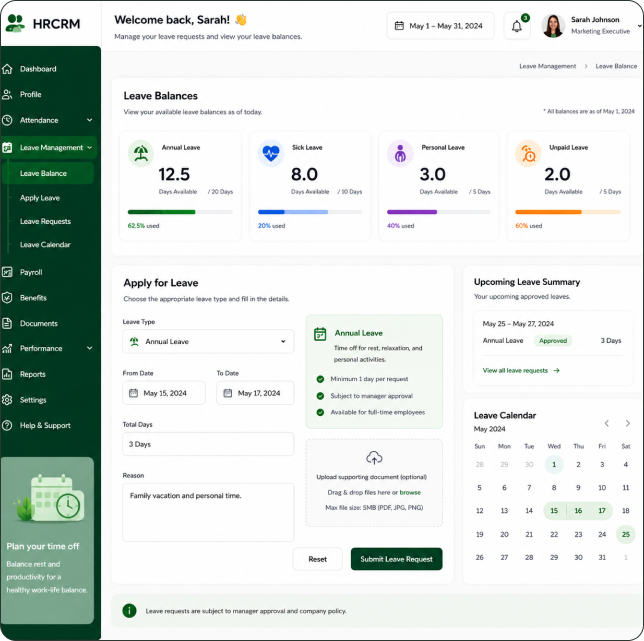
Employees view available leave balances and choose the appropriate time-off option.
Step 2
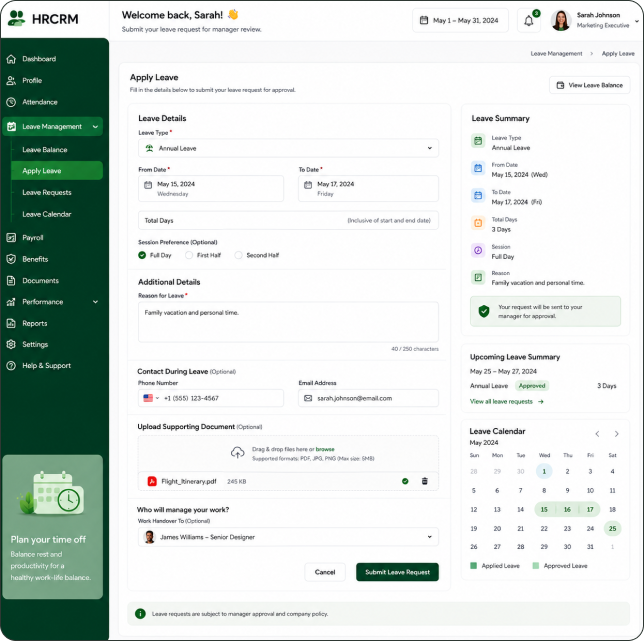
Employees submit their requested dates with the necessary details for manager review.
Step 3
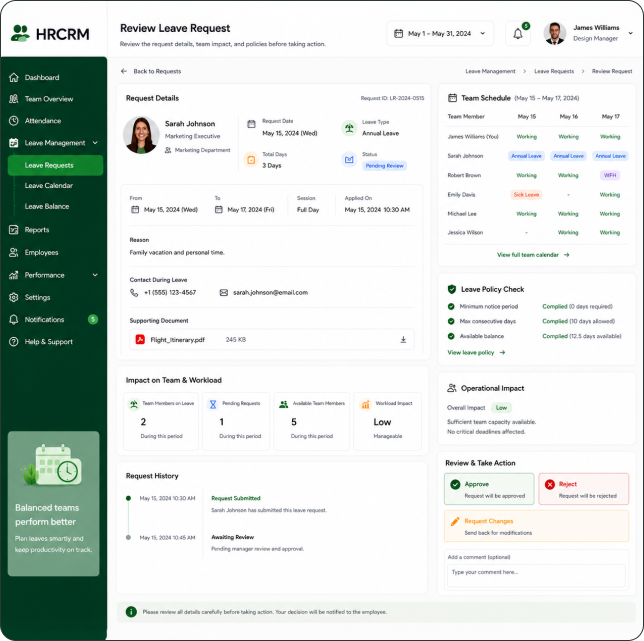
Managers review requests against team schedules, leave policies, and operational requirements before deciding.
Step 4
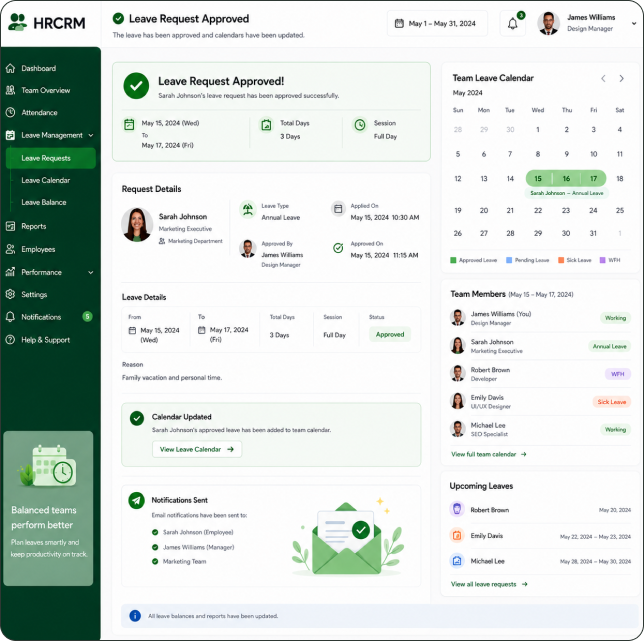
Approved leave updates records and calendars, keeping employees and teams aligned on upcoming absences.
Where Time Off Meets Real-World Work
Large Distributed Teams
Coordinate leave across departments, locations, and time zones while keeping employee availability visible.
Shift-Based Workforces
Plan employee absences around rotating schedules, staffing requirements, and daily operational coverage.
Hybrid Teams
Keep planned time off visible across employees working between office and remote environments.
Frontline Employees
Manage leave around staffing needs where employee availability directly affects daily operations and service delivery.
Project-Based Teams
Balance employee time off with project timelines, team dependencies, and important delivery milestones.
Seasonal Workforces
Plan leave around peak periods, changing workloads, and seasonal staffing requirements without losing visibility.
Growing Organizations
Maintain consistent leave practices as headcount increases, teams expand, and workplace policies evolve.
Global Workforces
Coordinate different leave policies, public holidays, and working calendars across regions and locations.
Flexible Workplaces
Give employees flexibility around time off while helping managers maintain visibility into team availability.
Better Leave Planning Starts Here
Centralize employee management, automate everyday HR processes, and empower your team with a secure, scalable platform designed for business growth.
Frequently Asked Questions (FAQs)
What is leave management software?
Leave management software helps organizations track employee time off, manage leave balances, handle requests, and coordinate approvals in one system.
What types of leave can an HR system manage?
An HR leave management system can manage PTO, sick leave, vacation, holidays, personal leave, and other organization-specific time-off categories.
How does leave management improve workforce planning?
It gives managers visibility into upcoming absences, helping them plan staffing, identify scheduling conflicts, and maintain adequate team coverage.
How does HRCRM simplify employee leave management?
HRCRM centralizes PTO tracking, holiday calendars, and leave approvals, giving employees and managers a clearer way to manage time off.